Showing posts with label Fan Community. Show all posts

Wednesday, December 12, 2012

The Thing About Star Trek

I am a HUGE Star Trek fan. I have loved it for years, from rushing home from school every afternoon to catch reruns at 4:00 PM from Channel 2 in Denver, to the whoops of excitement when The Next Generation premiered. I drifted away during the runs of Voyager and Enterprise, as far as appointment viewing, but I never lost interest. The movies were big events growing up. My (few) High School friends and I would make pilgrimages to the multiplex to see if Spock was really coming back to life, or how the crew was going to atone for their mutiny.

Star Wars was defining, but Star Trek was pervasive. There was so much of it, and it seemed able to embrace everything. Comedy episodes, high drama, full-out action spectacle. I guess I never expected it to be any one thing, because it seemed able to be anything. It seemed almost the ultimate example of the Vulcan IDIC, "Infinite Diversity in Infinite Combinations." The fact that, by some luck, the casts of the different versions have been more impressive than not helps, of course. How many franchises can sport top notch work from William Shatner AND Patrick Stewart?

I guess it was in 2007 sometime when I first heard that J.J. Abrams was going to make a new Trek film. It didn't take long for the word to get out that this would be a "reboot" of the franchise, with new actors in the iconic roles from the Original Series. It seemed so strange...James T. Kirk played by someone other than Shatner? A Spock who wasn't Leonard Nimoy? A difficult task at best, and impossible at worse.

When the film came out in 2009, after a delay, no less (always a bad sign), I was excited, but also somewhat worried. How could these actors, no matter how good they were, manage to replicate the chemistry of the original cast? Even if history had proven that group of actors to be just as fallible, and susceptible to bickering and jealousy, as any other group of actors working together.

When I saw it...I loved it.

Yes, it was slicker and faster. The cast was younger, although not by much, Pine was only 6 years younger than Shatner was when he fist played Kirk, and Quinto only 3 years younger than Nimoy. Maybe you could even say "prettier," which has become some sort of problem (like the original cast wasn't attractive). Yet, they began to interact, and I saw the characters, and the relationships I was familiar with. To a fault, the new cast were able to take the elements of the original performances, make them their own, and re-emerge with something I could truly enjoy.

I also loved that, by using time-travel, Abrams, and his writers, Roberto Orci and Alex Kurtzman, found a way to honor EVERYTHING that had come before, while at the same time cutting themselves free of all continuity. By setting their film, their Star Trek franchise, in an explicitly alternate timeline they could change anything without "destroying" the continuity that is, frankly, probably too damn important to many fans. Even their most vocal critics would have to admit it's a pretty damn elegant screenwriting solution to a thorny issue.(Compare it to the ham-handed Prometheus script, for example, trying to build a direct connection to Alien, but also trying to distance itself so as not to impede creative freedom at the same time. What a mess.)

Not everyone felt that way. Claiming that Abrams "dumbed down" Trek. Was not respectful to Gene Roddenberry's original vision. Was working to turn Trek into a wiz-bang Star Wars clone. The endless griping about lens flares. That one seemed so silly. Never in my life have I heard so many fanboys focus on something so meaningless in the grand scheme. Griping about an off-the-cuff comment like "not your father's Star Trek" (which I don't think was even in an official document), as being disrespectful and insulting.

All of this has been re-awoken recently as trailers for the sequel, Star Trek Into Darkness (not my favorite title - too puny) has hit screens, and the endless arguments over what villain Benedict Cumberbatch is playing. Honestly, I hope he's not Khan. I'd be OK if he's Gary Mitchell. I'm intrigued as hell if he's Robert April. Ultimately, however, I just want another go-around with these actors in these roles, in a compelling story. I've actually come to the point where I don't care. I'm content to wait for the film to open

Oh, I'll still read the speculation and reports, of course, but if we don't get any more solid info...I'm OK with that.

From where I'm sitting, Abrams' Star Trek was more faithful to the original series than any of the following Star Trek television efforts. The movies fared better, with one major exception, but I'll get to that. I think that the reason for that can be traced back to "The Great Bird" himself, Gene Roddenberry. I think Gene came up with a tremendous idea, and with a bunch of other people, notably producer Gene L. Coon, he crafted a sci-fi adventure series that managed to touch on deeper issues in a allegorical way. The emphasis however, was always on the adventure. You knew, week-in, week-out, Kirk was going to end up punching somebody, and usually bedding a leggy blonde guest star.

The idea was to create something exciting, and stick in some depth at the edges and in the subtext. Yes, yes, the original pilot, "The Cage," with Jeffrey Hunter as Captain Christopher Pike, was much more "cerebral" (but still ended with Pike threatening to break an alien's neck with his bare hands), and the network requested a "do-over" with more action. Giving us "Where No Man Has Gone Before," and Captain James T. Kirk.

Was the show about a better future society? A society with no war, no hunger and no racism? Of course it was. Abrams' version still is. A near-utopian society that turns to the stars for challenge since they've overcome all their internal societal problems? Yep. So is Abrams version.

However, something happened over the years between when the original series went off the air in 69, and when Roddenberry guided Star Trek: The Motion Picture to cinemas. This utopian vision of society became more and more of a selling point for Trekkers, and Roddenberry himself. When that vaguely snide local TV news reporter showed up and Star*Con '86 to do the inevitable interview with the overweight guy in the ill-fitting Kirk uniform, fandom (and Roddenberry) didn't want to say that they like the show because Jim Kirk kicks ass and bags all the chicks, or because Spock's cool logic is fairly erotic.

That makes us sound like the maturity-challenged mouth-breathers that reporter is expecting to see. No, it's a positive vision of the future, and a blueprint for a working future society of universal equality, respect and peace. A show that is about allegory to expose the ills of society that we grapple with now. Ills our heroes are beyond, but can help others struggle through.

Now, I am not, in any way, saying that those messages aren't there. They most certainly are, and that's what makes the show more than what, say, Lost in Space was (great show, to be sure, but it's goals were much more simplistic). That said, if we're all honest, that's not why we started tuning in. It's not why we love the characters.

The most glaring example of what I'm talking about is Star Trek: The Motion Picture, itself. The film has it's charms, and a few nice character beats. However, it's abundantly clear that, rather than the two-fisted sci-fi adventure the series was, Roddenberry was trying to reach for 2001: A Space Odyssey territory. I remember seeing the film for the first time, and being absolutely thrilled by the introduction of the Enterprise, herself. The rest of the film sort of just happened. Wonderful concepts and ideas, but I was not very engaged by the story itself.

Let me ask you, should the introduction of the Enterprise be the MOST exciting and emotional moment in a Star Trek film? A highlight of the film, especially after all that time? Of course. THE highlight? No.

Roddenberry, from that film forward, had lost the plot on his creation. One need only look to his (largely ignored) memos to filmmakers regarding the sequels. Claiming that Starfleet wasn't a military organization? Are you kidding? I am not claiming that Gene didn't continue to have good ideas, but one need only look to The Next Generation to see that his thoughts on what Star Trek was had swung hard away from the "boy's own adventure" trappings of the original series.

Is that bad? not inherently. Next Generation is terrific in large chunks, and has it's weak, even abysmal, episodes, like any series. It's also, in many ways "my" Star Trek. The one I was there for at the beginning, and that means a lot to me. It's special to me, but anybody can see that something changed, dramatically, between Roddenberry creating the original series, and creating The Next Generation.

It all comes back to the idea of this future world Gene imagined, and he, along with others, executed. I believe that because of primary importance to Gene, and it does fundamentally change what those later series are. The original series production team seemed intent that the crew would be us, and immediately identifiable as modern humanity, living in a world that encouraged and allowed our best natures to thrive. The crew of The Next Generation lose that, to lesser or greater extent, by becoming the "enlightened" version of humanity. Instead of showing us how the best of humanity would react in dramatic situations, with Kirk reacting as a modern man with the best intentions (often, admittedly, making questionable choices in the process), quite often Picard would be framed as a teacher, lecturing some less-evolved species in "how we used to be."

There was never any discernible friction among the crew of the Enterprise-D. This change was pretty obvious, so much so that every following Trek Series, Deep Space Nine, Voyager, and Enterprise, tried varying ways to bring conflict back into the main cast relationships.The creatives understood that part of what made the original series so beloved was that the cast were identifiably "modern man," rather than some ultra-enlightened future humanity. Heck, the attempt was made on Next Generation, itself, ejecting Gates McFadden's Dr. Crusher for one season, and bringing in Diana Muldaur's McCoy-clone (yeah, I said it)  Dr. Pulaski.

The entire thrust of Next Generation pushed toward non-violent, diplomatic and intellectual problem solving, rather than the tried and true Kirk solution of blowing something up. That's neither good, no bad, as I've said, I have a love of Picard and crew, but it did change something at the core of what Trek was. I referred to Next Generation as "my soap opera," whereas the original series was a full-out action-adventure show.

This is where I can't go with the critics who claim Abrams and his team "dumbed-down" Star Trek. In hindsight, I can critique the film for many things, but that's not one of them. There was a "big idea" being explored, much as Star Trek II: The Wrath of Khan was about "how we face death/age?" Abrams film was about "how do we embrace life/destiny/adulthood?" The "big idea" doesn't have to be racism, or war-mongering, or overpopulation, or any number of other social ills. It can be a "big idea" about the nature of being human. I'll freely admit that the Joseph Campbell/hero myth angle isn't terribly original, in fact it isn't at all.

One of my friends has put forth that Trek always works better as a TV show than movies. I can't argue with that. There's always more room to play with more philosophical ideas when you have 23-to-25 hours of episodes to play with, whereas a 2-hour movie, especially when the expectation is for an action-adventure, needs to be pretty propulsive.

Yes, it doesn't make a lot of sense for the Enterprise to have been built on the ground. Yes, "red matter" is ludicrous (but so is the Genesis device, or any number of other technologies the franchise has presented, honestly). I'm no fan of the bridge of the Enterprise looking like something bought at the Apple Store. Like pretty much any film, you can accept the elements it presents, or not.

But the movie is fun to watch, and identifiable as Star Trek. Identifiable as Star Trek was originally, an action-adventure with characters who feel immediate and we can relate to, and embracing a positive vision of the future of humanity among the stars. I think Drew McWeeny puts it best on page two of this report on visiting the production offices of Star Trek Into Darkness, talking about his son's immediate embracing of Trek after watching Abrams' original film:
 And when he and I talk about the Mars rover or go to the Planetarium or play with the star maps app on my phone sitting outside in our front yard, the enthusiasm he has for the idea of space and what it could contain is fueled in no small part by his belief in "Star Trek."  He sees a time in our future where we have gotten our shit together and we have shaken loose of the planet in a very real way.  We're not there yet, and we'll never get there if we don't re-inspire kids to want to go.  We need a next generation of astronauts, and if you talk to people who really did work in or around the space program, there are a whooooole lot of "Star Trek" fans in there.  It helps, but only if that's part of the equation.  I know that my first fascination with the show came from that notion of exploring the larger universe and meeting new races every week. Anything that encourages that sort of dreaming about exploration and expansion is okay by me.
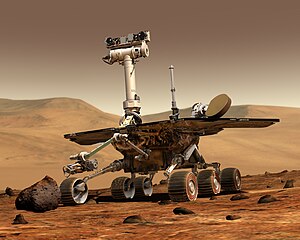
That, right there is the best of what Star Trek can do, and has done, from the beginning, and that is unchanged. Honestly, I think a good chunk of these reactions are based on fear and nostalgia. The idea that Shatner IS Kirk, that the original Enterprise should always look like what Bob Justman designed in the 60's, inside and out. Much like many Star Wars fans won't accept that, to kids today, it's more about Ewan McGregor's Obi-Wan than Harrison Ford's Han Solo, Trek fans need to accept that things change. To be happy that the franchise is still identifiable, and, in my humble opinion, more energized, fun, and unpredictable than it has been in a long time.

Tuesday, August 3, 2010

The Curse of the "Fanboy Press"

I think I've been pretty clear over the years that I think the division between fans of some form of entertainment and the people that create said entertainment is a sacred and important line. I've long felt that when fans begin to hold too much sway over the direction and output of a franchise, of any kind, it leads directly to creative bankruptcy.

Enterprise was a interesting way to take the Star Trek franchise (yeah, I said it), until the creatives buckled under the weight of fanboy/girl wishes. When the Ferengi showed up, I knew it was all over. It was downhill from there, because they had stepped over into the realm of fan fiction, and whatever might've come from exploring that era, and the birth of the Federation, was lost to, "I wonder how Archer would handle the Borg?"

Episode II of Star Wars, Attack of the Clones, is hands-down the worst of the series. Why? Because from frame one, you can see Lucas ticking off things that the fans had been bitching about not seeing in The Phantom Menace. Right down to throwing in Boba Fett, becaue we all love Boba Fett, right? That and letting Samuel L. Jackson just pose instead of act.

There's a fine line to walk between acknowledging that the fans are inherently important to the success of any franchise, and bowing to their ultimate power, chasing down their whims. Seriously, fans never actually know what they want. They'll say they want new and original, loudly and with conviction, then when you give it to them, they'll complain, loudly and with conviction, about the elements you left behind to achieve new and original.

The internet has compounded all of this. Fan press is a vital and important part of letting the fans communicate with each other and feel connected as a group, and it goes back to the mimeographed "fanzines" that were written and edited by fans, for fans. It's a valued and noble tradition. The problem is, it was never the place to go for hard news or criticism. Hell, even the legitimate publications, like Wizard magazine, are usually nothing but a marketing mouthpiece. (Look at that site, it's more about selling stuff than anything else)

The internet allowed the fanzines to reach larger amounts of fans, and gradually they became the place for news and announcements. The comic book publishers were coming to these sites to announce things and give interviews, and whatnot. The publishers saw cheap publicity, and a venue that would be so happy to just interview Geoff Johns, for example, that they'd never dare ask the tough questions, or call him out on missteps.

Now we have a journalist quagmire. Sites like Comic Book Resources or Newsarama are now considered legitimate news sources for the comic medium, but they lack the journalistic integrity that would allow them to truly become an important voice in the medium.

The flip side is also that, by allowing these fanzines such access, the publisher/studios have bred a sense of inflated importance in the fan community. Fan now expect special treatment, and they feel cheated if they don't get it. In many ways the fans have become spoiled.

Take this Newsarama article:

Op/Ed: SDCC Aftermath - Marvel Steals the Show ... Again!


Now, this is clearly marked an Op/Ed piece, so we'll not hold Mr. Avila to the level of journalistic integrity that would come from a "news" article. That said, this piece shows us a lot of the problems with the modern, internet-based fan press.

First off, there's the bias. Now, it's an Op/Ed piece, so this comment is technically irrelevant, but I offer it as a example of the sort of thing you can see all over these types of sites. When talking about the Avengers panel, we get;

more star power than Hall H has EVER seen at one particular moment, Marvel dropped the hammer on San Diego. The moment when the entire cast of the Avengers assembled onstage, bathed in flashbulbs and video camera lights and taking in ear-piercing applause, was one of those Double Rainbow, once-in-forever moments. It's no stretch to say that no one who was inside Hall H at the time, will ever forget it.

"More star power than Hall H has EVER seen?" One newly-minted A-lister (Downey), a solid B-lister (Jackson), an indie darling (Ruffalo), some up-and-commers (Johansson, Renner, and I'm giving it to Evans) and two guys no one's ever heard of (Hemsworth and Gregg). It's not a bad cast, in fact I like it a lot, and having Joss Whedon (who I think you could make an arguement was the most exciting person on the stage, in terms of a Comic-Con crowd) on board gives me a lot of hope...

But I think Harrison Ford walking out on that stage in handcuffs a couple of hours earlier trumps your star power, right there. Not to mention Angelina Jolie the day before. Even with the "at one particular moment" caveat, I think superstars like that are "dropping a hammer" on your theory. Not to mention that the Ford appearance was an honest-to-God surprise. After the Edward Norton debacle, everyone knew what Marvel was going to do.

Avila was clearly beside himself to be in that room. I understand that, but there's a point where, if you're putting yourself out there as a journalist (even in an Op/Ed piece), you have to step back and not just get swept away by the excitement of the moment. As a fan, you can bellow "THE MOST AWESOMEST THING EVER!!" and get away with it. I expect more from writers on a website, or publication of any kind, that I'm supposed to take knowledge from.

Second, it's the immediate, fanboy belief that they're owed something special. Doesn't matter if it exists, or not. Take these comments about Christopher Nolan;

I understand Christopher Nolan was busy with "Inception" promotion, but couldn't anyone high up the food chain impart to him the importance of flying down to San Diego to at least do an evasive Q & A? An update on "Batman 3" would have earned considerable press coverage. Even a few statements on the upcoming "Superman" reboot he's Godfathering would have been a major moment for the Con. A major missed opportunity.

It's really, really clear why Nolan didn't appear, and it really had nothing to do with Inception. I love Chris Nolan, and I've been eating up interviews with him. Every, single interview asks about Batman, and every, single time he says the same thing, "there's nothing to talk about."

The next Batman film will likely get shot early next year, they have a plot, which I'd guess translates to an outline. There's no script, there's no casting, and Nolan hasn't even agreed to direct, officially, at this point. The Superman situation is even more nebulous.

He takes one film at a time, and focuses completely on that film, and Warner Brothers seems to respect that. Why can't we, as fans, do the same thing? There was no Nolan panel because, literally, there is nothing to talk about. There's no need to "Impart the importance" of going to SDCC to do nothing but stroke the fan ego. It's because it's not important, making great films is important.

Likewise Mr. Avila's reactions to the Green Lantern panel;

The WB showed only a minute of footage from "Green Lantern" at their panel. And while that brief reel had everyone who saw it recanting the Green Lantern oath as they walked through the Gas Lamp District, they didn't show any shots of Ryan Reynolds in uniform. Word has it they're retooling the GL costume after the initial image on the cover of "Entertainment Weekly" was greeted with less glowing praise. Whatever the reason, it seemed a very conservative panel, very 'play it safe.' And it's the little things, too, that matter. They only showed the footage ONCE! A 60-second clip reel, and they couldn't be bothered to show it again?! Awful decision. It's a good thing Reynolds had that nice moment with the young fan, reciting the GL oath word-for-word and then signing an autograph for the kid, because otherwise, the noise from the Marvel panel would have completely drowned out the post-Con coverage of the Warners' presentation.


There's a reality to be understood about the Green Lantern movie. The "suit" is a pure CGI creation. Why no shots of the suit? Perhaps because they weren't done? Maybe the design is being re-tooled, but so what? The movie doesn't come out for ten months!

Again, we see a "gimmie, gimmie, gimmie" reaction. You only showed the footage once? HORRORS!

This actually leads into the third thing, which makes me want to wax poetic about my childhood. When I first started getting really interested in movies, you really wouldn't hear anything about them until maybe two months beforehand. Usually it was an actual, honest-to-God coming attractions trailer, maybe a teaser trailer. I remember a glorious one for Superman: The Movie;


I jumped out of my skin when I first saw it. If you showed it to a Comic-Con crowd today, the internet would be filled with variations of "they didn't show us ANYTHING!!!" Then on to various comments about how the movie must stink.

I defy anyone to tell me Superman: The Movie "stinks."

See, the fan community has grown to believe that you're only proud of something if you're willing to show it to us. Because they've come to believe they are an integral part of the process. If you're not willing to let us see something, then something must be wrong, the makers must be ashamed in some way.

Take Avila's comments about Chris Evans as Captain America/Steve Rogers;

Something else we learned from the Marvel panel is that Chris Evans is the biggest wild card of the incredibly grand Avengers experiment. We know Robert Downey Jr. is going to bring it as Tony Stark/Iron Man, and Chris Hemsworth looks to be in lockstep with his hybrid Thor from the Ultimates universe and from Walt Simonson's classic Thor run, so it's up to Evans to carry his share of the load of the Big Three. Watching the development of this film is going to be interesting, because Cap is so important to the Marvel mythos, that without a strong effort from Evans, the whole thing could fall apart.

While I agree, wholeheartedly, that getting Cap right is absolutely essential, I also figure that Joe Johnston and the Marvel team knew what they were doing when they cast the guy. Why is it that, just because all they have is a brief costume test of they guy, his performance becomes suspect? The fact is, they've only been rolling film for a few weeks. I'd wonder if he's even put on the suit for actual shooting at this point.

Can't we just let them make their movie, and judge, y'know, after we've seen it?

The studios seem only too willing to be held hostage by the fanbase. To bow and grovel to them for approval before anything is even created. Joss told another panel that the Avengers script isn't anywhere near done. So, they have a cast and a director...that tells us pretty much nothing that a press release couldn't.

I think the studios are losing the track. The publicity is taking over the process. They've bought into the integral nature of the fanbase, and seem to be more than happy to treat them as the ultimate word, rather than the creative people they've hired to actually solve the problems.

We are fans, and we do get excited. We want to know more, everything we can, and we want the creators to know we are watching, and will judge what they do. The creators don't owe us anything but their best work, and that doesn't need to be exactly the way we think it ought to be. We need to be open to different interpretations of this material that we love, and we need to have faith in the people working on these projects. No one sets out to create something bad. Let them finish before we tear them apart.

Now, I mean no disrespect to Mr. Avila, although, as a comic book fan, why weren't you at the myriad panels about actual comics on that Saturday? (I'm joking, of course.)

I'm also fully aware that this blog can be attacked in the same manner I'm employing.

The core point is that it would be nice if Comic Book Resources, Newsarama, and other sites of that nature might step up and try to move away from the fanzine model. The comic book industry needs a legitimate press that will function not only as a publicity platform, but also as a voice for quality and better work.