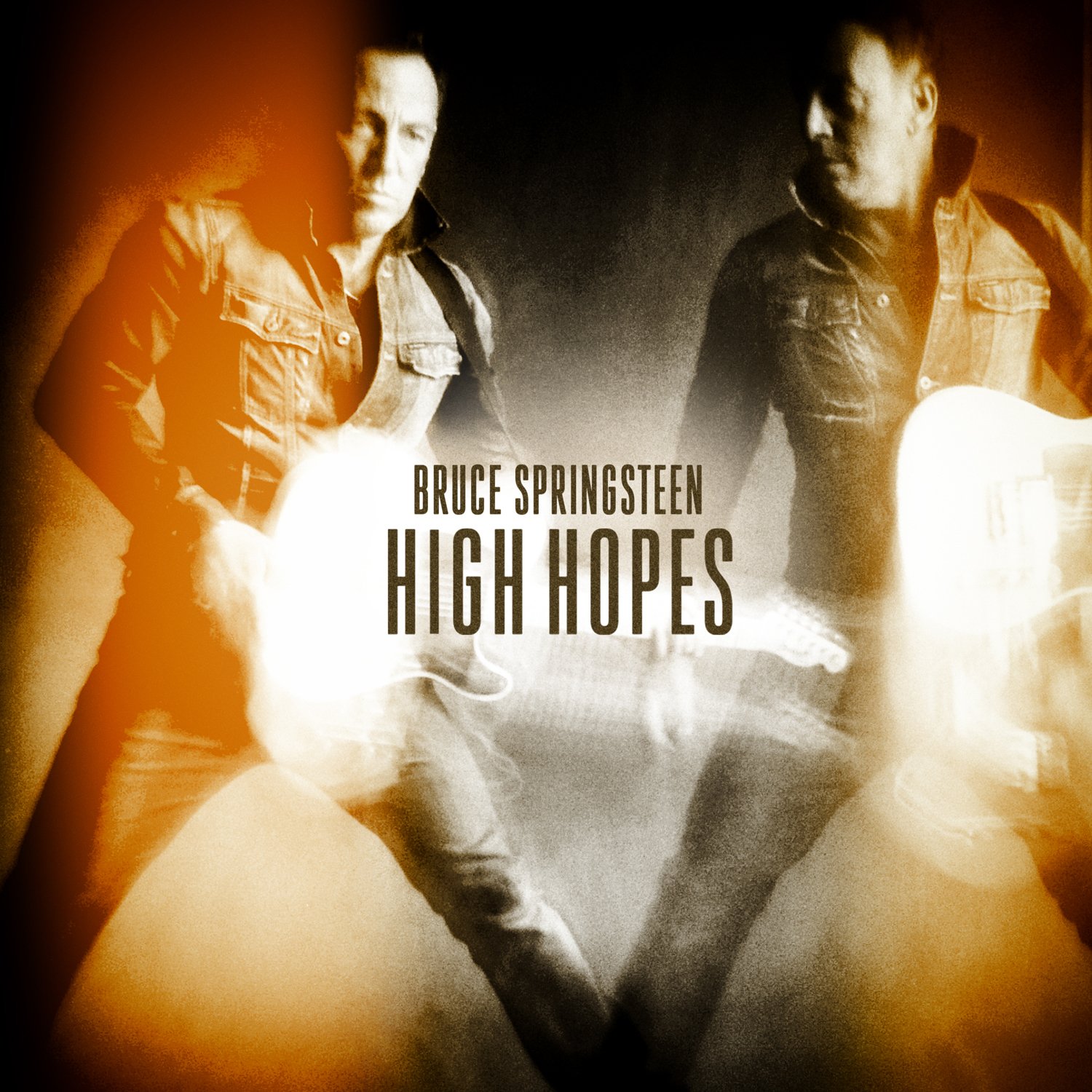
The announcement, on November 25th, 2013, of this album's impending arrival was a bit of a surprise. The "rumor mill" had mutterings that the E-Street Band had gone into the studio while touring Australia with Tom Morello standing in for Little Steven Van Zandt.
It was only a few weeks between the announcement of the new album, and release of the title single, and when the album dropped on January 14th, 2014.
I was excited, as I am always excited with a new Springsteen release. That said, the format this project shaped up to be was a little disappointing to me. The are relatively few "new" Springsteen compositions on the record, unreleased leftovers from projects reaching back to The Rising. I am a big fan of this sort of thing, and Springsteen's Tracks box set, a hodge-podge of alternate takes and leftover songs from the first 20 years, or so, of his career, is pretty much on constant rotation for me.
The rest of the tracks consist of covers and Springsteen compositions that are pretty familiar to fans. Songs that have become associated with Morello's "special guest" guitar work. Again, I'm a fan of what Morello's guitar work brings to the E-Street mix. I know a lot of people aren't (Hello Matt K), but I dig it, and Morello's presence at the Wrigley Field shows was a true highlight. The first time I heard a recording of Morello sitting in with the band for The Ghost of Tom Joad, my mind was blown. It still is, every time I hear it live. I was excited to see what Morello would bring to the recording studio.
Thing is, I simply wish that, instead of billing High Hopes as "The NEW Springsteen Album," the record had gone out as a (much) briefer version of Tracks. A way to clear some good numbers off the shelf that Bruce wanted to get out to the public, but didn't fit with the original albums they were written for. Harry's Place, aside from sounding too much (title-wise) like Mary's Place, is a pretty damn cool track, and it has no place on a powerful, directed statement like The Rising album. So, I'm happy to hear it released, and I really like what Morello added. Likewise, The Wall is a really fantastic number about the Vietnam Memorial. I'm over the moon that's it's available to me in high quality, but the connective tissue is tenuous for what I've come to expect from a "New Springsteen Album."
I think the most disappointing thing is the studio versions of tracks that are widely available in live versions. American Skin (41 Shots), one of Springsteen's absolute best protest songs, has a live, and definitive, version on Live in New York City. What Bruce cooks up in the studio simply can't touch what was captured at Madison Square Garden.
The Morello-fied The Ghost of Tom Joad is great, but it's pretty much the exact same arrangement (and guitar solo) that could be found on the Magic Tour Highlights download released to support the Danny Federici Melanoma Fund. Frankly, the energy and power of the live version is not captured in the studio version.
Not to beat a dead horse, but again, if you want the definitive version of Bruce's cover of Suicide's Dream Baby Dream, with The Boss solo on a small pump organ, it's right here. (Side note: I was actually in the house when he played this song for the first time on the Devils and Dust tour at the Rosemont Theatre - it closed every remaining show of that tour, and it was an amazing, stunning performance) Adding more musicians doesn't add to the power of the song, and the intimate feeling I had with Bruce the 3-4 times I saw it performed live. The studio version simply doesn't add anything.
Lest it seem like I HATE this album, or something, there is lots to like here. The three tracks above are all good and listenable, but simply unneeded. The Wall is worth the whole purchase, and I've really taken to the title track (written by Tim Scott McConnell) and the Just Like Fire Would (written by Chris J. Bailey) covers.
Nothing here is "bad," it just doesn't coalesce into what my expectations (admittedly high) are of a "New Springsteen Album."
After receiving my (early - I feel so important! ;-) ) copy of Kathy Zimmer's latest Static Inhabited (which you should download RIGHT NOW - it's terrific), I immediately reached out to tell her how much I loved the song order. I felt weird, honestly, after I sent it...it seems like faint praise, "yeah, the songs are in a nice order." Thing is, what I was trying to get at is that her record felt like a unified whole, with a flow of music that took me on a journey. That's how I feel about pretty much every Springsteen album.
High Hopes doesn't make it, and it's really just because of my expectations of a "New Springsteen Album," if I'm honest with myself. If the marketing had placed it as what it truly is, a collection of leftovers and sundries that are absolutely worthwhile, but aren't a unified vision, I'd probably be singing this record's praises.
Favorite Tracks
High Hopes
Harry's Place
Just Like Fire Would
The Wall
The rambling thoughts of a comic/sci-fi/movie/TV fan, and Chicago actor. Don't say we didn't warn you that half the posts will be pointless.
Showing posts with label Monday Morning With The Boss. Show all posts
Thursday, January 23, 2014
Monday, March 12, 2012
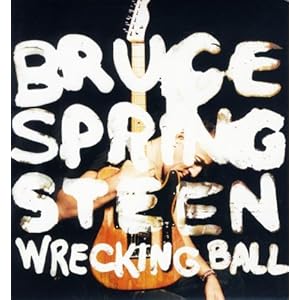
Monday With The Boss - Part 17: Wrecking Ball
Springsteen is always good when he's angry.
Make no mistake, Wrecking Ball is an angry record. It's a rather blunt indictment of the environment of greed that led our country into the financial mess we're in right now. He's seeing the hard-working people of America getting swamped under a financial wave that can't be stopped, no matter how hard they work to stay on top of it. The dice are loaded in favor of the haves, who don't seem to give a fig what happens to the have nots.
Politics are politics, a "message" is all well and good, but Springsteen the songwriter is just too damn good to forget the catchy tunes. It's becoming a hallmark of Springsteen's work, the more he's trying to make a point, the more I actually enjoy the songs as songs. The tracks here, especially "Shackled and Drawn" and "Death to My Hometown," are so good at getting your toe tapping, your fist in the air, that you can't help but feel their power as rallying cries.
I can also say that, after the detour into a more pop vein with Working on a Dream, Bruce's lyrics have come back to carrying weight. These songs are powerful, lyrically. Even with the "recycled" tracks here, "Wrecking Ball," "Land of Hope and Dreams," and "American Land," there's a renewed vigor to them as they sit in the midst of epic laments like "Jack of all Trades." This is Springsteen back where he belongs, as the chronicler and troubadour of the working class. A working class left behind.
The surprising part of Wrecking Ball is the musical evolution. Springsteen and producer Ron Aniello have brought in elements like drum loops and samples, and somehow used them to broaden the Springsteen sound. "Rocky Ground" is clearly the most experimental track here, and, while it's not my favorite, I certainly admire the embracing of divergent elements. Vocalist Michelle Moore almost full-out duets on the track, and provides a rap. You can bet there's a certain segment of the Springsteen fanbase livid over this track. Of course, that was my favorite part of Working on a Dream, as well. The exploration of new sounds.Your mileage may vary.
I'm particularly jazzed about Tom Morello's (Rage Against the Machine) appearance on "Jack of All Trades" and "This Depression." I have loved every collaboration these two men have done together, especially the live version of "The Ghost of Tom Joad." Morello provides a appropriate guitar solo on each track, that also is distinctively him. It's lovely work.
We also have what, I would imagine, will be Clarence Clemons' final contribution to the Springsteen legacy, a terrific sax solo on "Land of Hope and Dreams." I found myself very emotional the first few times I listened to it. It's beautiful work, as always from the Big Man, and it does somewhat make the entire track feel like a tribute to him.
The Special Edition CD also provides two bonus tracks "Swallowed Up (In the Belly of the Whale)" and yet another version of "American Land." I love that song, but after closing every show for the last two tours with it, I think I am done.
It's hard to tell where I'd place Wrecking Ball in the later-career Springsteen catalog. (I don't even bother trying to compare these records to the early albums...there's a genius there, a raw, unstoppable burst of musical release, that no artist 30 plus years into a career can match.) It's going to take a few more listens to get a handle on it, but it's got that same fire that The Rising and Magic had. A sense of purpose and drive. I think it's gonna be a keeper.
Favorite Tracks:
Make no mistake, Wrecking Ball is an angry record. It's a rather blunt indictment of the environment of greed that led our country into the financial mess we're in right now. He's seeing the hard-working people of America getting swamped under a financial wave that can't be stopped, no matter how hard they work to stay on top of it. The dice are loaded in favor of the haves, who don't seem to give a fig what happens to the have nots.
Politics are politics, a "message" is all well and good, but Springsteen the songwriter is just too damn good to forget the catchy tunes. It's becoming a hallmark of Springsteen's work, the more he's trying to make a point, the more I actually enjoy the songs as songs. The tracks here, especially "Shackled and Drawn" and "Death to My Hometown," are so good at getting your toe tapping, your fist in the air, that you can't help but feel their power as rallying cries.
I always loved the feel of sweat on my shirt
Stand back son and let a man work
Let a man work, is that so wrong
I woke up this morning shackled and drawn
Stand back son and let a man work
Let a man work, is that so wrong
I woke up this morning shackled and drawn
I can also say that, after the detour into a more pop vein with Working on a Dream, Bruce's lyrics have come back to carrying weight. These songs are powerful, lyrically. Even with the "recycled" tracks here, "Wrecking Ball," "Land of Hope and Dreams," and "American Land," there's a renewed vigor to them as they sit in the midst of epic laments like "Jack of all Trades." This is Springsteen back where he belongs, as the chronicler and troubadour of the working class. A working class left behind.
So you use what you’ve got and you learn to make do
You take the old, you make it new
If I had me a gun, I’d find the bastards and shoot ’em on sight
I’m a jack of all trades, we’ll be all right
You take the old, you make it new
If I had me a gun, I’d find the bastards and shoot ’em on sight
I’m a jack of all trades, we’ll be all right
The surprising part of Wrecking Ball is the musical evolution. Springsteen and producer Ron Aniello have brought in elements like drum loops and samples, and somehow used them to broaden the Springsteen sound. "Rocky Ground" is clearly the most experimental track here, and, while it's not my favorite, I certainly admire the embracing of divergent elements. Vocalist Michelle Moore almost full-out duets on the track, and provides a rap. You can bet there's a certain segment of the Springsteen fanbase livid over this track. Of course, that was my favorite part of Working on a Dream, as well. The exploration of new sounds.Your mileage may vary.
Now, no shells ripped the evening sky
No cities burning down
No army stormed the shores for which we’d die
No dictators were crowned
I awoke on a quiet night, I never heard a sound
The marauders raided in the dark
And brought death to my hometown
They brought death to my hometown
No cities burning down
No army stormed the shores for which we’d die
No dictators were crowned
I awoke on a quiet night, I never heard a sound
The marauders raided in the dark
And brought death to my hometown
They brought death to my hometown
I'm particularly jazzed about Tom Morello's (Rage Against the Machine) appearance on "Jack of All Trades" and "This Depression." I have loved every collaboration these two men have done together, especially the live version of "The Ghost of Tom Joad." Morello provides a appropriate guitar solo on each track, that also is distinctively him. It's lovely work.
We also have what, I would imagine, will be Clarence Clemons' final contribution to the Springsteen legacy, a terrific sax solo on "Land of Hope and Dreams." I found myself very emotional the first few times I listened to it. It's beautiful work, as always from the Big Man, and it does somewhat make the entire track feel like a tribute to him.
Well, I will provide for you
And I’ll stand by your side
You’ll need a good companion now
For this part of the ride
Leave behind your sorrows
Let this day be the last
Tomorrow there’ll be sunshine
And all this darkness past
And I’ll stand by your side
You’ll need a good companion now
For this part of the ride
Leave behind your sorrows
Let this day be the last
Tomorrow there’ll be sunshine
And all this darkness past
The Special Edition CD also provides two bonus tracks "Swallowed Up (In the Belly of the Whale)" and yet another version of "American Land." I love that song, but after closing every show for the last two tours with it, I think I am done.
It's hard to tell where I'd place Wrecking Ball in the later-career Springsteen catalog. (I don't even bother trying to compare these records to the early albums...there's a genius there, a raw, unstoppable burst of musical release, that no artist 30 plus years into a career can match.) It's going to take a few more listens to get a handle on it, but it's got that same fire that The Rising and Magic had. A sense of purpose and drive. I think it's gonna be a keeper.
Favorite Tracks:
Shackled and Drawn
Jack of All Trades
Death to My Hometown
Wrecking Ball
Land of Hope and Dreams
Monday, December 6, 2010
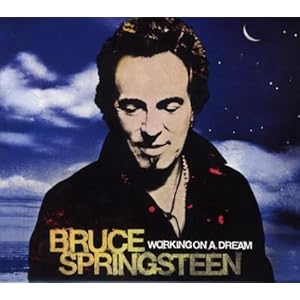
Monday With The Boss - Part 16: Working on a Dream
And here we are with the most recent Springsteen release, Working on a Dream. The album was released on January 27th, 2009. It presented material that was viewed as a direct continuation of the Magic sessions, and Brendan O'Brien once again served as Producer.
To say that the fanbase was disappointed with Working on a Dream would be a fair assessment. It represents probably the single greatest "left turn," in terms of style and tone, that Springsteen has ever released. Not that there weren't hints. There are several tracks on Magic, notably Girls in Their Summer Clothes and Your Own Worst Enemy, that echo the style that dominates this album.
I, personally, feel like the goal here was to create an album that sounded like a 1960's pop record, there's so many tracks that feel like they echo The Beach Boys, or The Byrds. It's a far more ethereal sound that anything we've ever heard on a Springsteen record. Far more lush and enveloping, rather that that driving energy that we've come to expect from Springsteen backed by the E-Street Band.
A lot of hay was made over the lyrical content, but again, I think he was shooting for a pop record, not unlike what he grew up listening to on the Jersey shore. Yeah, Queen of the Supermarket has kinda silly lyrics, but, man, it's evocative. I also think that the whole song is more than a little tongue-in-cheek, which makes the consternation some fans had over this track incredibly silly to me. Fact is, I love it, I think it's gorgeous, and one of the best on the album.
That said, there is more than a little truth to the claim that the lyrics are slight. I mean, I never thought I'd see that day that Bruce Springsteen and The E-Street Band recorded a birthday song. So, that's odd, but I've always tried to be a fan that was about taking in what the artist has to offer, rather than feeling it has to be something I expect. Yeah, yeah, I know...that sounds like I'm saying I'm a "better" fan than others, but really, I just like to see/hear what's turning my favorite artists on. I try not to have preconceived notions of what an artist "should" create.
That said, along those lines, I was amused by one message board post about the album that said some to the effect of, "how could Little Steven let him do this?!?!" Which I thought was just asinine, and displayed a bit of ignorance. Little Steven Van Zandt loves, loves, LOVES 60's pop music. I read several interviews where he wished Bruce would make that kind of album. I bet Steven ADORED making Working on a Dream.
All that aside, Working on a Dream is, frankly, a letdown. It would be hard not to be coming off of a great record like Magic. When you have an album like Magic, that re-asserts the artist as a significant cultural force, to turn around and, in extremely short order, issue a work that, admittedly by design, is far more lightweight, it can't help but throw a spotlight on the weaknesses of the latter work. "Weaknesses" may be too harsh a term, honestly. Working on a Dream is, again, in my humble opinion, simply not intended to resonate in the way Magic does.
...But we sorta expected it to.
For myself, I found that the tracks I most strongly hooked into were the ones that were the most lightweight. The aforementioned Queen of the Supermarket, My Lucky Day and What Love Can Do are all great pop songs. And there's a whole swath of songs that veer toward the sappy, This Life, Life Itself, Tomorrow Never Knows and Kingdom of Days all head that way. Outlaw Pete is a cute little opener (maybe a bit too similar to Kiss' I Was Made for Lovin' You), that just drags on, and on, and on, until the fun of it is bled dry. I couldn't really even imagine what the thought process there was. Likewise, the title track is just kinda...Meh. Really, part of the problem is that it's just too nakedly an attempt to create a Obama rally song. There's no fire to it.
Honestly, the best two track on the record come at the end, and are the darkest,most traditionally "Springsteen" songs. The Last Carnival, a tribute to E-Street founder Danny Federici, is simply gorgeous, and completely fitting to "Phantom" Dan. The final bonus track, The Wrestler. from the movie of the same name, is, for me, hands down the best song on the album. It's so evocative of both the film and Micky Rourke's character, and finds the same nobility that the film itself hits.
What a damn shame it was declared ineligible for an Oscar.
The long and the short of it is that I think Working on a Dream is a fine album, but the fact that it aims for a completely different target from basically anything else in Springsteen's catalog makes it difficult to really get your mind around. God knows, it's extremely cool to see a veteran artist take a vastly different stylistic turn late in their career (and it is late in Bruce's career, no way around that). Again, something you won't ever see The Rolling Stones, for example, do. Still, that makes it feel kind of like the red-headed stepchild.
...And, with that, all good, or diverting, or annoying, or hopelessly fannish, things must come to an end.
This certainly won't be the last "Monday With The Boss," but, as of this entry, the entire catalog of Springsteen studio albums has been exhausted. So, I'm certain to revive this feature whenever a new CD is released, but, as a weekly feature, it's days are over.
There may be specials, as well. I mean, we haven't ever touched upon Tracks, the 18 Tracks sampler of the same, or The Promise, offering outtakes from Bruce's career. Nor have I written about the six live albums, or the seven live DVD videos available. There's material that could be covered, but, especially in the case of the live material, you'll get to a level of fanboy wankery and obsession that I truly doubt any general reader would want to endure. Plus, there's so much material overlap between the audio and video live releases, it would be silly to separate them. It just seems like a lot to tackle, especially when the meat of the matter is the albums.
Bottom line, I'm not going to stop writing about Springsteen. I expect I'll have a blog on The Promise sooner, rather than later, but it's such a massive set, it's taking a long time to process. It'll come, but it takes time.
Maybe I'll actually make goon on my promise/threat, and start one of these series about the Rush catalog...
To say that the fanbase was disappointed with Working on a Dream would be a fair assessment. It represents probably the single greatest "left turn," in terms of style and tone, that Springsteen has ever released. Not that there weren't hints. There are several tracks on Magic, notably Girls in Their Summer Clothes and Your Own Worst Enemy, that echo the style that dominates this album.
I, personally, feel like the goal here was to create an album that sounded like a 1960's pop record, there's so many tracks that feel like they echo The Beach Boys, or The Byrds. It's a far more ethereal sound that anything we've ever heard on a Springsteen record. Far more lush and enveloping, rather that that driving energy that we've come to expect from Springsteen backed by the E-Street Band.
A lot of hay was made over the lyrical content, but again, I think he was shooting for a pop record, not unlike what he grew up listening to on the Jersey shore. Yeah, Queen of the Supermarket has kinda silly lyrics, but, man, it's evocative. I also think that the whole song is more than a little tongue-in-cheek, which makes the consternation some fans had over this track incredibly silly to me. Fact is, I love it, I think it's gorgeous, and one of the best on the album.
That said, there is more than a little truth to the claim that the lyrics are slight. I mean, I never thought I'd see that day that Bruce Springsteen and The E-Street Band recorded a birthday song. So, that's odd, but I've always tried to be a fan that was about taking in what the artist has to offer, rather than feeling it has to be something I expect. Yeah, yeah, I know...that sounds like I'm saying I'm a "better" fan than others, but really, I just like to see/hear what's turning my favorite artists on. I try not to have preconceived notions of what an artist "should" create.
That said, along those lines, I was amused by one message board post about the album that said some to the effect of, "how could Little Steven let him do this?!?!" Which I thought was just asinine, and displayed a bit of ignorance. Little Steven Van Zandt loves, loves, LOVES 60's pop music. I read several interviews where he wished Bruce would make that kind of album. I bet Steven ADORED making Working on a Dream.
All that aside, Working on a Dream is, frankly, a letdown. It would be hard not to be coming off of a great record like Magic. When you have an album like Magic, that re-asserts the artist as a significant cultural force, to turn around and, in extremely short order, issue a work that, admittedly by design, is far more lightweight, it can't help but throw a spotlight on the weaknesses of the latter work. "Weaknesses" may be too harsh a term, honestly. Working on a Dream is, again, in my humble opinion, simply not intended to resonate in the way Magic does.
...But we sorta expected it to.
For myself, I found that the tracks I most strongly hooked into were the ones that were the most lightweight. The aforementioned Queen of the Supermarket, My Lucky Day and What Love Can Do are all great pop songs. And there's a whole swath of songs that veer toward the sappy, This Life, Life Itself, Tomorrow Never Knows and Kingdom of Days all head that way. Outlaw Pete is a cute little opener (maybe a bit too similar to Kiss' I Was Made for Lovin' You), that just drags on, and on, and on, until the fun of it is bled dry. I couldn't really even imagine what the thought process there was. Likewise, the title track is just kinda...Meh. Really, part of the problem is that it's just too nakedly an attempt to create a Obama rally song. There's no fire to it.
Honestly, the best two track on the record come at the end, and are the darkest,most traditionally "Springsteen" songs. The Last Carnival, a tribute to E-Street founder Danny Federici, is simply gorgeous, and completely fitting to "Phantom" Dan. The final bonus track, The Wrestler. from the movie of the same name, is, for me, hands down the best song on the album. It's so evocative of both the film and Micky Rourke's character, and finds the same nobility that the film itself hits.
What a damn shame it was declared ineligible for an Oscar.
The long and the short of it is that I think Working on a Dream is a fine album, but the fact that it aims for a completely different target from basically anything else in Springsteen's catalog makes it difficult to really get your mind around. God knows, it's extremely cool to see a veteran artist take a vastly different stylistic turn late in their career (and it is late in Bruce's career, no way around that). Again, something you won't ever see The Rolling Stones, for example, do. Still, that makes it feel kind of like the red-headed stepchild.
...And, with that, all good, or diverting, or annoying, or hopelessly fannish, things must come to an end.
This certainly won't be the last "Monday With The Boss," but, as of this entry, the entire catalog of Springsteen studio albums has been exhausted. So, I'm certain to revive this feature whenever a new CD is released, but, as a weekly feature, it's days are over.
There may be specials, as well. I mean, we haven't ever touched upon Tracks, the 18 Tracks sampler of the same, or The Promise, offering outtakes from Bruce's career. Nor have I written about the six live albums, or the seven live DVD videos available. There's material that could be covered, but, especially in the case of the live material, you'll get to a level of fanboy wankery and obsession that I truly doubt any general reader would want to endure. Plus, there's so much material overlap between the audio and video live releases, it would be silly to separate them. It just seems like a lot to tackle, especially when the meat of the matter is the albums.
Bottom line, I'm not going to stop writing about Springsteen. I expect I'll have a blog on The Promise sooner, rather than later, but it's such a massive set, it's taking a long time to process. It'll come, but it takes time.
Maybe I'll actually make goon on my promise/threat, and start one of these series about the Rush catalog...
Monday, November 29, 2010
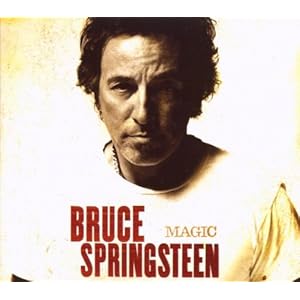
Monday With The Boss - Part 15: Magic
After the previous two trips outside the E-Street Band style, Springsteen returned to the band on October 2nd, 2007 with Magic. Frankly, I find this album to be the strongest of this latter era of his career, and frankly, with The Rising out there, that's saying something. There's what I would consider a perfect mixing of the political, personal, and the outright fun on this album.
The opening track Radio Nowhere, sets the mood. It's a muscular E-Street rocker, full of big guitars and big, Max Weinberg drums. It's fun, it'll get your fist pumping, but there's more underneath. Now maybe that's an indictment of satellite radio, and the homogenization of the airwaves. Or maybe it's about the general public's lack of reaction and understanding of the legacy of George W. Bush's Presidency. Or maybe it's just a feel-good rock 'n roll song about getting lost in the music.
Well, it's all of that. In a way it's the perfect track for Magic. All across the album, there are hints and allegations, but without ever losing the hook into the idea that what Springsteen does best is tell stories and make toes tap.
I'm a big believer that the best way to make a political statement is to tie it, intimately, to the personal. You get bonus points if you can then turn it even further and make the whole thing entertaining. Magic is an album that is simply fun to listen to. It's so much fun that even fans who had problems dealing with Springsteen espousing leftist viewpoints (and, man, there were a lot of them...which is really odd to me, it's not like it came out of the blue) took to the album.
There are so many great songs here. You'll Be Comin' Down is a personal favorite. Livin' in the Future became a live staple, despite more than a passing resemblance to Tenth Avenue Freeze-Out, mixing both a warning and a call to arms into a song that's just great to dance to.
Then there's tracks that embrace a new sound for the E-Street Band. Girls in Their Summer Clothes sounds like a Beach Boys tune at times. Your Own Worst Enemy and I'll Work For Your Love head in that direction, as well. It's a whole new side of the band, and we'd be due to hear more in that direction.
The last five tracks of the album proper have a wondrous unity, building a narrative around the the journey America had been on during the Bush years. Magic, which is probably the most nakedly critical track on the album, into Last To Die. From there we go to Long Walk Home, which looks to the future with a feeling that the heart of America will always right itself from the wrong path, though that process is almost always a long one. Then Devil's Arcade, which almost feels like a eulogy for what had been lost.
Last we have a late addition to the record before it was released, a song for Springsteen confidant Terry McGovern, who had passed away shortly before. Terry's Song is a truly heartfelt and emotional goodbye, and it really gets to me every, single time I hear it.
Magic is one of those albums that really shouldn't exist. An artist in the third decade of his career really shouldn't be crafting albums that feel this immediate and connected. To me, it's proof positive that Springsteen is still a valid and powerful artistic force. The record just simply says so much about how Springsteen sees the world, with clarity and power, that alone would make it special, but Bruce takes it that much further, and makes it a celebration of all that his band can do, and how much fun it is to hear them do it.
The opening track Radio Nowhere, sets the mood. It's a muscular E-Street rocker, full of big guitars and big, Max Weinberg drums. It's fun, it'll get your fist pumping, but there's more underneath. Now maybe that's an indictment of satellite radio, and the homogenization of the airwaves. Or maybe it's about the general public's lack of reaction and understanding of the legacy of George W. Bush's Presidency. Or maybe it's just a feel-good rock 'n roll song about getting lost in the music.
Well, it's all of that. In a way it's the perfect track for Magic. All across the album, there are hints and allegations, but without ever losing the hook into the idea that what Springsteen does best is tell stories and make toes tap.
I'm a big believer that the best way to make a political statement is to tie it, intimately, to the personal. You get bonus points if you can then turn it even further and make the whole thing entertaining. Magic is an album that is simply fun to listen to. It's so much fun that even fans who had problems dealing with Springsteen espousing leftist viewpoints (and, man, there were a lot of them...which is really odd to me, it's not like it came out of the blue) took to the album.
There are so many great songs here. You'll Be Comin' Down is a personal favorite. Livin' in the Future became a live staple, despite more than a passing resemblance to Tenth Avenue Freeze-Out, mixing both a warning and a call to arms into a song that's just great to dance to.
Then there's tracks that embrace a new sound for the E-Street Band. Girls in Their Summer Clothes sounds like a Beach Boys tune at times. Your Own Worst Enemy and I'll Work For Your Love head in that direction, as well. It's a whole new side of the band, and we'd be due to hear more in that direction.
The last five tracks of the album proper have a wondrous unity, building a narrative around the the journey America had been on during the Bush years. Magic, which is probably the most nakedly critical track on the album, into Last To Die. From there we go to Long Walk Home, which looks to the future with a feeling that the heart of America will always right itself from the wrong path, though that process is almost always a long one. Then Devil's Arcade, which almost feels like a eulogy for what had been lost.
Last we have a late addition to the record before it was released, a song for Springsteen confidant Terry McGovern, who had passed away shortly before. Terry's Song is a truly heartfelt and emotional goodbye, and it really gets to me every, single time I hear it.
Magic is one of those albums that really shouldn't exist. An artist in the third decade of his career really shouldn't be crafting albums that feel this immediate and connected. To me, it's proof positive that Springsteen is still a valid and powerful artistic force. The record just simply says so much about how Springsteen sees the world, with clarity and power, that alone would make it special, but Bruce takes it that much further, and makes it a celebration of all that his band can do, and how much fun it is to hear them do it.
Monday, November 22, 2010
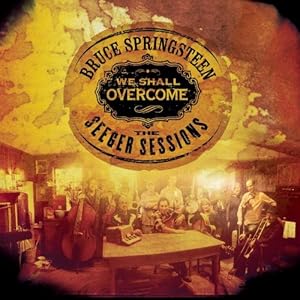
Monday With The Boss - Part 14: We Shall Overcome: The Seeger Sessions
On April 25th, 2006, Springsteen fans got a, unwanted for some, detour from the traditional idea of what a "Springsteen Record" was. Stemming from a jam session with a band that was hired to play a party at the Springsteen home, Bruce embarked on recording a set of traditional songs, ostensibly connected by being part of Pete Seeger's songbook. The result was We Shall Overcome: The Seeger Sessions.
The recording of this album was an intermittent project, over many years. Occasionally, Bruce would gather musicians and record a few tracks. It was not an "in and out, it's done" proposition. I'd almost call it a hobbyist project. When Bruce spoke of it, it almost seemed that way.
Now, for myself, I always felt like the Seeger connection was pretty weak. It seemed like it was fairly quickly forgotten. By the time Springsteen went on the road for this disk, his backing band was known simply as "The Sessions Band."
I don't know if, at some point, Springsteen felt that simply putting out an album of covers of traditional American tunes wasn't a cohesive enough statement, and settled upon the Seeger tribute as an additional reasoning. I think the sheer exuberance and fun that oozes from this record was all the reason that was needed. There's a real sense of liberation in these songs, a bucking of expectations.
These aren't Springsteen-penned songs, they're not rock n' roll, The E-Street Band isn't involved. The reactions, that I saw, among the fanbase went from joy over a really fun detour, to resentment. A lot of people felt like Devils & Dust and this record, especially, were taking time and energy away from the reformed E-Street Nation, right when the momentum was high. Critics, however, ate up this record, and I found a lot of people, non-believers, really took to it. I heard, "I don't really like Springsteen, but this is great!" a lot.
For myself, I had a great deal of fun with this album, and the tour was joyous. The Sessions Band was an amazing collection of players, and the shows were as high in energy as any tour with The E-Street Band. Sure, there's a few tracks that leave me cold, that just kinda plod onward. Erie Canal starts out well, but then just seems to run out of gas, and We Shall Overcome, for being the title track, really feels uninspired, almost like it's obligatory. That doesn't take back from the goofy grin I get listening to Old Dan Tucker, Pay Me My Money Down, or Froggie Went A-Courtin'.
One thing you can say is that, for a side-project, detour-type thing, Springsteen committed to it. The tour was long, and traveled all over the world. My understanding was that the concept was much better received in Europe, as in the US, The Sessions Band played to less-than-full capacity on a regular basis. Many Springsteen fans simply refused to attend.
A damn shame, in my opinion. These shows were full of great music, expertly played, with tons of showmanship from the, I think it was seventeen, musicians onstage. Bruce also re-cast several of his songs to work in the format, including Blinded By the Light, Growin' Up and Open all Night. Frankly, the Sessions Band version of the latter is my favorite version of the song, hands down.
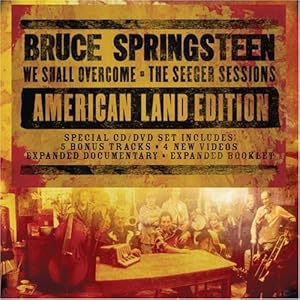
As the tour continued, a expanded version of the album was released, We Shall Overcome: The Seeger Sessions - American Land Edition has to be the longest album title in Springsteen history. The added material was quite good, especially a version of How Can a Poor Man Stand Such Times and Live with a Springsteen-written verse connecting to the victims of Hurricane Katrina in New Orleans (which was the location of the Sessions Band's first live gig.) Also included was the only Springsteen song written for the project, American Land. The song has been a staple of not only the Sessions Band shows, but also E-Street Band shows, ever since.
If you're going to pop for a copy of this album, I would definitely recommend the American Land Edition over the original.
I , of course, have both. Ahhh...fandom.
The recording of this album was an intermittent project, over many years. Occasionally, Bruce would gather musicians and record a few tracks. It was not an "in and out, it's done" proposition. I'd almost call it a hobbyist project. When Bruce spoke of it, it almost seemed that way.
Now, for myself, I always felt like the Seeger connection was pretty weak. It seemed like it was fairly quickly forgotten. By the time Springsteen went on the road for this disk, his backing band was known simply as "The Sessions Band."
I don't know if, at some point, Springsteen felt that simply putting out an album of covers of traditional American tunes wasn't a cohesive enough statement, and settled upon the Seeger tribute as an additional reasoning. I think the sheer exuberance and fun that oozes from this record was all the reason that was needed. There's a real sense of liberation in these songs, a bucking of expectations.
These aren't Springsteen-penned songs, they're not rock n' roll, The E-Street Band isn't involved. The reactions, that I saw, among the fanbase went from joy over a really fun detour, to resentment. A lot of people felt like Devils & Dust and this record, especially, were taking time and energy away from the reformed E-Street Nation, right when the momentum was high. Critics, however, ate up this record, and I found a lot of people, non-believers, really took to it. I heard, "I don't really like Springsteen, but this is great!" a lot.
For myself, I had a great deal of fun with this album, and the tour was joyous. The Sessions Band was an amazing collection of players, and the shows were as high in energy as any tour with The E-Street Band. Sure, there's a few tracks that leave me cold, that just kinda plod onward. Erie Canal starts out well, but then just seems to run out of gas, and We Shall Overcome, for being the title track, really feels uninspired, almost like it's obligatory. That doesn't take back from the goofy grin I get listening to Old Dan Tucker, Pay Me My Money Down, or Froggie Went A-Courtin'.
One thing you can say is that, for a side-project, detour-type thing, Springsteen committed to it. The tour was long, and traveled all over the world. My understanding was that the concept was much better received in Europe, as in the US, The Sessions Band played to less-than-full capacity on a regular basis. Many Springsteen fans simply refused to attend.
A damn shame, in my opinion. These shows were full of great music, expertly played, with tons of showmanship from the, I think it was seventeen, musicians onstage. Bruce also re-cast several of his songs to work in the format, including Blinded By the Light, Growin' Up and Open all Night. Frankly, the Sessions Band version of the latter is my favorite version of the song, hands down.
As the tour continued, a expanded version of the album was released, We Shall Overcome: The Seeger Sessions - American Land Edition has to be the longest album title in Springsteen history. The added material was quite good, especially a version of How Can a Poor Man Stand Such Times and Live with a Springsteen-written verse connecting to the victims of Hurricane Katrina in New Orleans (which was the location of the Sessions Band's first live gig.) Also included was the only Springsteen song written for the project, American Land. The song has been a staple of not only the Sessions Band shows, but also E-Street Band shows, ever since.
If you're going to pop for a copy of this album, I would definitely recommend the American Land Edition over the original.
I , of course, have both. Ahhh...fandom.
Monday, November 15, 2010
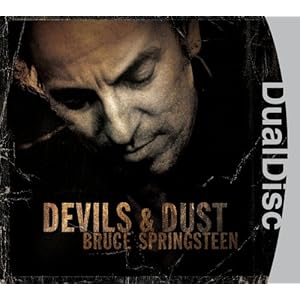
Monday With The Boss, Part 13: Devils & Dust
The next Springsteen release was on April 26th, 2005. It was a step back to a "solo" project, and back to a much more acoustic sound. This was Devils & Dust.
In a lot of ways, Devils & Dust was a clearing house of a lot of material that had been floating around for a decade or more. Many of these tracks were originally intended for a follow-up to The Ghost of Tom Joad, in the same vein. Yet, it's not all dusty, old material, as, again continuing from Joad, this is an album in the protest vein.
Kind of amusing to me, realizing just now that there is exactly one decade between the two releases. It's also funny, as I sit here looking at the track list, that it's really not as much of a protest record as I remember. There's definitely protest songs here, but the overall feel is much more of storytelling. Kind of along the lines of Nebraska, but, let's be honest, not as good.
The opening, title track is definitely a protest song. Throwing us into the shoes of a soldier in, one assumes, Iraq. Again, the real strength here isn't the political, it's the personal. Springsteen says nothing about the buildup of the war, or the misleading WMD reasoning, but asks us to envision what it's like to be a soldier in combat. The sacrifices that must be made, and the personal beliefs that are challenged, and often put aside, when it becomes a matter of survival.
Generally speaking, the recurring theme is people who've reached a point of decision, or crisis. In all of these songs, we see people place in situations where they must make a choice that will change them forever. Be it, the young man in Black Cowboys, leaving his drug-addled mother to try to make a better life, inspired by the western movies playing on TV, or The Hitter, finally coming to the last place he thinks he might find solace or acceptance, at his mother's locked door.
The one, true, honest-to-God Tom Joad sequel is Matamoros Banks, which Springsteen has called a direct sequel to Joad's Across the Border. One with a less than happy ending. He would play these two together on most nights of the Devils & Dust tour. (I'll get to that in a bit here.)
The one true classic song that most fans have embraced from the album is Long Time Comin', which tells of a man finally coming into the world of being a father. I completely agree that this is likely the strongest song on the album. It's a relatively simple song, but it's so much fun to play. The lyric is also powerful in a deceptively simple manner. When It comes around to the line "I ain't gonna fuck it up this time," I feel that, even as simply a man and a husband. I also love that he took to singing the line as "I hope I don't fuck it up this time" on tour, reflecting the uncertainty of life. (Of course, Bruce said he felt it just made him sound cocky, LOL)
I'm also a HUGE fan of Jesus Was an Only Son, which places Jesus, in his final minutes, and Mary in the context of simply a mother and child. This is one of those songs that reminds me of the power of the Christ story. I'm not an overly religious person, but the idea that Jesus was human, he felt pain and fear, he had a mother, it connects me to the sacrifice in a much more personal way. It's why I've always been perplexed by the reactions to The Last Temptation of Christ, both as a novel and film. There's something about connecting Jesus to the rest of humanity as a man, with all the strengths and weaknesses that comes along with that, that makes him a greater figure to me.
There are several gems on the album, just rattling off some favorites, there's Reno, which walks the line between what we try to call love, and what it actually is. Maria's Bed, which is just a fun song, no other way to put it. Of course, both of those songs, I wonder if their "Maria" is connected to the "Maria" of Tom Joad's The Line. I also really enjoy Leah.
One of the more interesting things about the Devils & Dust release was the only time, so far, that Springsteen has released a "value added" DualDisc. Essentially, the dick was a "flipper," with one side being the regular CD of the album, and the opposite side being a DVD, with video content, and a 5.1 Surround Sound version of the album, as well. The Video content is described on the Springsteen website as follows;
Now, I've listened to this album quite a lot. I think I've watched the video stuff once. So, y'know...whatever you want to take from that.
One thing I do have to say as a bit of a coda to this entry is to talk about the Devils & Dust tour, which I can only really describe as a religious experience. Springsteen toured solo, much like after The Ghost of Tom Joad, but the schedule was much broader and hit a lot more cities. It also seemed, from reports (as I, personally, never saw the Joad tour), that Springsteen was simply enjoying himself a lot more. Watching the man essay his entire carreer, up to that point, on acoustic guitar, as well as some keyboards, was really, really special.
I saw the show twice. Once at The Rosemont Theatre in Rosemont, IL, and then again at the Bradley Center in Milwaukee, WI. The Rosemont show was far more intimate, but the Bradley Center was just a setlist to die for. He ended the show with Growin' Up (my favorite Springsteen song, ever) right into Does This Bus Stop at 82nd Street? which is another all-time favorite. He also managed to do pretty much all of Nebraska that night. I'll treasure those evenings.
I really don't think I'll ever forget how he re-cast Reason to Believe into a foot-stompin' harmonica number
Not the best quality, I know...but that song gave me chills.
In a lot of ways, Devils & Dust was a clearing house of a lot of material that had been floating around for a decade or more. Many of these tracks were originally intended for a follow-up to The Ghost of Tom Joad, in the same vein. Yet, it's not all dusty, old material, as, again continuing from Joad, this is an album in the protest vein.
Kind of amusing to me, realizing just now that there is exactly one decade between the two releases. It's also funny, as I sit here looking at the track list, that it's really not as much of a protest record as I remember. There's definitely protest songs here, but the overall feel is much more of storytelling. Kind of along the lines of Nebraska, but, let's be honest, not as good.
The opening, title track is definitely a protest song. Throwing us into the shoes of a soldier in, one assumes, Iraq. Again, the real strength here isn't the political, it's the personal. Springsteen says nothing about the buildup of the war, or the misleading WMD reasoning, but asks us to envision what it's like to be a soldier in combat. The sacrifices that must be made, and the personal beliefs that are challenged, and often put aside, when it becomes a matter of survival.
Generally speaking, the recurring theme is people who've reached a point of decision, or crisis. In all of these songs, we see people place in situations where they must make a choice that will change them forever. Be it, the young man in Black Cowboys, leaving his drug-addled mother to try to make a better life, inspired by the western movies playing on TV, or The Hitter, finally coming to the last place he thinks he might find solace or acceptance, at his mother's locked door.
The one, true, honest-to-God Tom Joad sequel is Matamoros Banks, which Springsteen has called a direct sequel to Joad's Across the Border. One with a less than happy ending. He would play these two together on most nights of the Devils & Dust tour. (I'll get to that in a bit here.)
The one true classic song that most fans have embraced from the album is Long Time Comin', which tells of a man finally coming into the world of being a father. I completely agree that this is likely the strongest song on the album. It's a relatively simple song, but it's so much fun to play. The lyric is also powerful in a deceptively simple manner. When It comes around to the line "I ain't gonna fuck it up this time," I feel that, even as simply a man and a husband. I also love that he took to singing the line as "I hope I don't fuck it up this time" on tour, reflecting the uncertainty of life. (Of course, Bruce said he felt it just made him sound cocky, LOL)
I'm also a HUGE fan of Jesus Was an Only Son, which places Jesus, in his final minutes, and Mary in the context of simply a mother and child. This is one of those songs that reminds me of the power of the Christ story. I'm not an overly religious person, but the idea that Jesus was human, he felt pain and fear, he had a mother, it connects me to the sacrifice in a much more personal way. It's why I've always been perplexed by the reactions to The Last Temptation of Christ, both as a novel and film. There's something about connecting Jesus to the rest of humanity as a man, with all the strengths and weaknesses that comes along with that, that makes him a greater figure to me.
There are several gems on the album, just rattling off some favorites, there's Reno, which walks the line between what we try to call love, and what it actually is. Maria's Bed, which is just a fun song, no other way to put it. Of course, both of those songs, I wonder if their "Maria" is connected to the "Maria" of Tom Joad's The Line. I also really enjoy Leah.
One of the more interesting things about the Devils & Dust release was the only time, so far, that Springsteen has released a "value added" DualDisc. Essentially, the dick was a "flipper," with one side being the regular CD of the album, and the opposite side being a DVD, with video content, and a 5.1 Surround Sound version of the album, as well. The Video content is described on the Springsteen website as follows;
Devils & Dust (Columbia Records) has been released exclusively in DualDisc format, with the full album on CD on one side of the disc and DVD content on the other side. The DVD side will feature the first live performances of Devils & Dust material. Filmmaker/photographer Danny Clinch captured new, acoustic renditions of "Devils & Dust," "Long Time Comin'," "Reno," All I'm Thinkin' About," and "Matamoras Banks," each with Springsteen's extensive, personal introductions. The performances were filmed in New Jersey in February 2005. The DVD side will also contain the entire album mixed in 5.1 channel surround sound and in stereo.
Now, I've listened to this album quite a lot. I think I've watched the video stuff once. So, y'know...whatever you want to take from that.
One thing I do have to say as a bit of a coda to this entry is to talk about the Devils & Dust tour, which I can only really describe as a religious experience. Springsteen toured solo, much like after The Ghost of Tom Joad, but the schedule was much broader and hit a lot more cities. It also seemed, from reports (as I, personally, never saw the Joad tour), that Springsteen was simply enjoying himself a lot more. Watching the man essay his entire carreer, up to that point, on acoustic guitar, as well as some keyboards, was really, really special.
I saw the show twice. Once at The Rosemont Theatre in Rosemont, IL, and then again at the Bradley Center in Milwaukee, WI. The Rosemont show was far more intimate, but the Bradley Center was just a setlist to die for. He ended the show with Growin' Up (my favorite Springsteen song, ever) right into Does This Bus Stop at 82nd Street? which is another all-time favorite. He also managed to do pretty much all of Nebraska that night. I'll treasure those evenings.
I really don't think I'll ever forget how he re-cast Reason to Believe into a foot-stompin' harmonica number
Not the best quality, I know...but that song gave me chills.
Tuesday, November 9, 2010
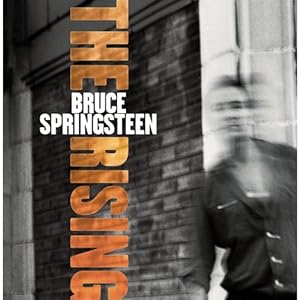
Tuesday/Monday With The Boss - Part 12: The Rising
Sorry we're a little late this week. I was off to New Mexico for a long weekend.
A lot had changed between the Tom Joad release and July, 30th 2002, when The Rising hit store shelves. Seven years had passed. There was a reunion with the E-Street Band that prompted a very successful, financially and artistically, tour. On that tour Bruce also has said he found his "Rock 'n Roll voice" again, which he'd felt like he lost during the Tom Joad period...
...And, on September 11th, 2001, Islamic radicals slammed jet airliners into the World Trade Center towers and the Pentagon, as well as crashing another into the Pennsylvania countryside. It was the largest attack on American soil since Pearl Harbor. The country was in shock.
Springsteen tells a story of driving in New Jersey after 9/11, when a truck pulled up next to him, and the man inside leaned out and said, "we need ya, Bruce."
I kinda get choked up thinking of that. As an artist, you always want something to let you see that you've touched people. Something to show that you've struck a chord, and given something to the world that hits home. I can't even imagine how it feels to have someone, even if it's just one guy in a pickup, tell you that, in the darkest times, you can give comfort.
Now, to a lot of people, that may seem like a silly thing, but what that driver understood, and being from the great state of New Jersey probably biased him, but what the hell, was that Springsteen has always been a voice to confront and transcend the darkest of times. In album after album, song after song, Bruce is willing to write songs that say, in no uncertain terms, that it's dark out there, but he also never fails to find those lights of hope.
The Rising is a testament to Springsteen's ability to see events and times from many, many angles. To see beyond the empty posturing that was being shilled out by one-note cretins like Toby Keith at the same time. Bruce says it himself, in Lonesome Day;
It's easy to say, "we're coming to kick your ass," but the real question is, what does that do to us, in the process? The Rising takes us in many directions, but the ultimate thrust is to take a look at what we've lost. To stop and think about the very personal stories of those who were taken, of those who went face-first into death. There is not one, single track here that addresses a major political point, it's all about people. While others turned their gaze (and I'm going to say it, hate) outward, Bruce looked inside, and tried to find the places to start healing.
The title track itself is heartbreaking in it's clear imagining of the last moments of a first responder. Jumping back and forth from images of effort and strain to serene thoughts of family. There's no need for details or comments about the Twin Towers, this is about music, and feeling, not facts. The generic nature of what's sung reminds us that these men and women do this every day, and face the same end every day. The firemen, policemen, and EMTs at the WTC on 9/11 are know in history because of the enormity of the event, but every house fire contains the potential for the same result.
The album, to me, feels like a guide through the whole, terrible process of grief, from bargaining in Counting on a Miracle, to the pride and honor of Into the Fire, to survivor's guilt in Nothing Man. Springsteen weaves a tapestry of pain and healing, reminding all of us that it's a long, slow process to become whole. Of course, it's Springsteen, and he's not going to let us forget that sometimes you just need to have a party and be thankful you're still here, possibly at Mary's Place, or in a more intimate vein.
The Rising really represents a re-invigoration of Springsteen as an artist. While other classic rock acts have shuffled into a nostalgia-fueled "elder statesmen" status, Springsteen, in one fell swoop, created an album that was, in many circles, THE statement on 9/11. We all love The Rolling Stones, and I actually like many of their more recent albums, but when was the last time a Stones album really meant something, other than another massive tour? The Rising was immediate and powerful, it didn't trade on past glories, it merged with what you were feeling right at that moment.
Brendan O'Brien had sole producer's credit. I'll admit, I found it odd for a producer associated with acts like Pearl Jam and Stone Temple Pilots to be working with Springsteen. Although, I'd liked a lot of his past work, including the Dogman album by one of my personal favorites, King's X. Yet, clearly Bruce and O'Brien hit it off, as they've been a team ever since.
We also can't fail to mention that The Rising also heralded the return of the mighty E-Street Band to a full Springsteen album. Clearly, the reunion tour had been a fantastic experience for Bruce, and it's been made clear that the E-Street band will forever be an option, as long as Springsteen is still making records.
Although, not one that he would always use....
A lot had changed between the Tom Joad release and July, 30th 2002, when The Rising hit store shelves. Seven years had passed. There was a reunion with the E-Street Band that prompted a very successful, financially and artistically, tour. On that tour Bruce also has said he found his "Rock 'n Roll voice" again, which he'd felt like he lost during the Tom Joad period...
...And, on September 11th, 2001, Islamic radicals slammed jet airliners into the World Trade Center towers and the Pentagon, as well as crashing another into the Pennsylvania countryside. It was the largest attack on American soil since Pearl Harbor. The country was in shock.
Springsteen tells a story of driving in New Jersey after 9/11, when a truck pulled up next to him, and the man inside leaned out and said, "we need ya, Bruce."
I kinda get choked up thinking of that. As an artist, you always want something to let you see that you've touched people. Something to show that you've struck a chord, and given something to the world that hits home. I can't even imagine how it feels to have someone, even if it's just one guy in a pickup, tell you that, in the darkest times, you can give comfort.
Now, to a lot of people, that may seem like a silly thing, but what that driver understood, and being from the great state of New Jersey probably biased him, but what the hell, was that Springsteen has always been a voice to confront and transcend the darkest of times. In album after album, song after song, Bruce is willing to write songs that say, in no uncertain terms, that it's dark out there, but he also never fails to find those lights of hope.
The Rising is a testament to Springsteen's ability to see events and times from many, many angles. To see beyond the empty posturing that was being shilled out by one-note cretins like Toby Keith at the same time. Bruce says it himself, in Lonesome Day;
I think it's no accident that this is the song that kicks off the album.Hell's brewin' dark sun's on the rise
This storm'll blow through by and by
House is on fire, Viper's in the grass
A little revenge and this too shall pass
This too shall pass, I'm gonna pray
Right now all I got's this lonesome day
It's allright - It's allright - It's allright
Better ask questions before you shoot
Deceit and betrayals bitter fruit
It's hard to swallow, come time to pay
That taste on your tongue don't easily slip away
It's easy to say, "we're coming to kick your ass," but the real question is, what does that do to us, in the process? The Rising takes us in many directions, but the ultimate thrust is to take a look at what we've lost. To stop and think about the very personal stories of those who were taken, of those who went face-first into death. There is not one, single track here that addresses a major political point, it's all about people. While others turned their gaze (and I'm going to say it, hate) outward, Bruce looked inside, and tried to find the places to start healing.
The title track itself is heartbreaking in it's clear imagining of the last moments of a first responder. Jumping back and forth from images of effort and strain to serene thoughts of family. There's no need for details or comments about the Twin Towers, this is about music, and feeling, not facts. The generic nature of what's sung reminds us that these men and women do this every day, and face the same end every day. The firemen, policemen, and EMTs at the WTC on 9/11 are know in history because of the enormity of the event, but every house fire contains the potential for the same result.
The album, to me, feels like a guide through the whole, terrible process of grief, from bargaining in Counting on a Miracle, to the pride and honor of Into the Fire, to survivor's guilt in Nothing Man. Springsteen weaves a tapestry of pain and healing, reminding all of us that it's a long, slow process to become whole. Of course, it's Springsteen, and he's not going to let us forget that sometimes you just need to have a party and be thankful you're still here, possibly at Mary's Place, or in a more intimate vein.
The Rising really represents a re-invigoration of Springsteen as an artist. While other classic rock acts have shuffled into a nostalgia-fueled "elder statesmen" status, Springsteen, in one fell swoop, created an album that was, in many circles, THE statement on 9/11. We all love The Rolling Stones, and I actually like many of their more recent albums, but when was the last time a Stones album really meant something, other than another massive tour? The Rising was immediate and powerful, it didn't trade on past glories, it merged with what you were feeling right at that moment.
Brendan O'Brien had sole producer's credit. I'll admit, I found it odd for a producer associated with acts like Pearl Jam and Stone Temple Pilots to be working with Springsteen. Although, I'd liked a lot of his past work, including the Dogman album by one of my personal favorites, King's X. Yet, clearly Bruce and O'Brien hit it off, as they've been a team ever since.
We also can't fail to mention that The Rising also heralded the return of the mighty E-Street Band to a full Springsteen album. Clearly, the reunion tour had been a fantastic experience for Bruce, and it's been made clear that the E-Street band will forever be an option, as long as Springsteen is still making records.
Although, not one that he would always use....
Monday, November 1, 2010
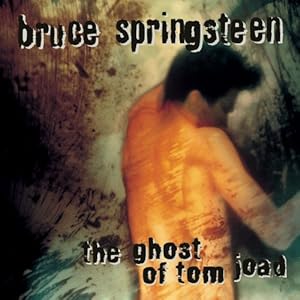
Monday With The Boss - Part 11: The Ghost of Tom Joad
The release of Human Touch and Lucky Town didn't really go over as planned. There was a lot of resentment about the sacking of The E-Street Band, and, as I have mentioned, the replacements didn't really provide anything other than a really good impression of the people they were replacing.
That's a comment that shouldn't really be taken as a criticism of anyone but, really, Springsteen, himself. The session musicians on those two albums do really impeccable work. They only pale when compared to a specter that's not of their own making. For example, Shane Fontayne's guitar work is fantastic, his skill is on par with Nils Lofgren, and way beyond Little Steven, but he's not them...and that's just something he had no way to get around, no matter how well he played.
During the break we also got a Live set with the "other band," and a really underwhelming greatest hits set. The Greatest Hits offered three new tracks with the E-Street Band, but only Murder, Incorporated really made an impact. This Hard Land was pretty nondescript, and really didn't offer any of the propulsion the band was capable of. Blood Brothers was nice, especially lyrically, but again felt strangely muted for a song that, ostensibly, celebrated a reunion with the team.
So, Springsteen, when he headed back into the studio, really ejected the "band" concept all together. The primary sound of The Ghost of Tom Joad, released November 21st, 1995, is Springsteen's voice and his acoustic guitar.
The title really tells it all, the album is rife with dust bowl imagery, and clearly it's Springsteen taking his shot at becoming a modern-day Woody Guthrie. That, on the surface is a really self-indulgent notion, but Springsteen managed to avoid the major traps by finding a modern subject matter than resonated and reflected Guthrie's dust bowl stories, but felt immediate and timely. That of the plight of immigrants, legal or otherwise, in America.
The tone is even more sparse and bleak than Nebraska, but Joad turns the subject matter outside, rather than in. It doesn't get much more bleak than the Mexican boy holding in his organs in place after being struck by a car in Balboa Park. Or the brothers caught in a Meth lab explosion during Sinaloa Cowboys.
It is with The Ghost of Tom Joad that we begin to see the nakedly political Springsteen. This is protest music, make no mistake, and it functions in that realm. It's not the most fun Springsteen album to listen to, it's "good for you, high fiber" stuff. I say that to be clear about what you get in this album, not to scare you off. There are tracks on this record that are beloved to me. The Line is an amazing work of storytelling, one that has haunted me with the idea of a stage adaptation since I really sat down and listened to it.
Storytelling is the main thrust here, narratives abound, and that is why the politics work in this case. Bruce goes to great pains to make the politics personal, and it is riveting stuff. When he sings of the ex-con struggling to walk the straight and narrow path in Straight Time, you feel for him because Bruce has gone to great pains to get inside the man's head. When, in the final lines, he saws off a shotgun, you feel the sting of that failure, because the lines before, and the music, have made it clear it's the end of a long struggle. A struggle that has ended in failure, no matter what the result of the impending crime.
These are not "catchy" tunes, in the main. They tend to build a tapestry of the events that Springsteen is conveying, the point is not to get you dancing, or tapping your feet. That said, the album does end on a moment of levity and fun with My Best was Never Good Enough. The title track also offers a pretty catchy chorus, while building a deep mood of desperation. So, it's not all downer here, but be prepared.
The Ghost of Tom Joad is a personal favorite, if I get right down to it. I actually listen to these songs more than the Nebraska tracks. There's something about the simple, sparse arrangements and the involving stories that really sucks me into the place where Springsteen was with this material. The production, by Springsteen and Chick Plotkin, really serves up Bruce effectively in this acoustic troubadour milieu. The album sounds great, like you're sitting in a living room listening to Bruce play.
The short, solo acoustic tour that followed this album because somewhat infamous. Not only for the scarcity of tickets, but for Springsteen's chastising some audiences who were in the mood for a louder, more raucous show. After the fact, Bruce has commented that he felt that, with this record, he had left rock and roll behind. He even worried that, when the E-Street Band reunion tour finally happened in the late 90's, that he would no longer be able to sing rock.
Clearly, that wasn't an issue.
That's a comment that shouldn't really be taken as a criticism of anyone but, really, Springsteen, himself. The session musicians on those two albums do really impeccable work. They only pale when compared to a specter that's not of their own making. For example, Shane Fontayne's guitar work is fantastic, his skill is on par with Nils Lofgren, and way beyond Little Steven, but he's not them...and that's just something he had no way to get around, no matter how well he played.
During the break we also got a Live set with the "other band," and a really underwhelming greatest hits set. The Greatest Hits offered three new tracks with the E-Street Band, but only Murder, Incorporated really made an impact. This Hard Land was pretty nondescript, and really didn't offer any of the propulsion the band was capable of. Blood Brothers was nice, especially lyrically, but again felt strangely muted for a song that, ostensibly, celebrated a reunion with the team.
So, Springsteen, when he headed back into the studio, really ejected the "band" concept all together. The primary sound of The Ghost of Tom Joad, released November 21st, 1995, is Springsteen's voice and his acoustic guitar.
The title really tells it all, the album is rife with dust bowl imagery, and clearly it's Springsteen taking his shot at becoming a modern-day Woody Guthrie. That, on the surface is a really self-indulgent notion, but Springsteen managed to avoid the major traps by finding a modern subject matter than resonated and reflected Guthrie's dust bowl stories, but felt immediate and timely. That of the plight of immigrants, legal or otherwise, in America.
The tone is even more sparse and bleak than Nebraska, but Joad turns the subject matter outside, rather than in. It doesn't get much more bleak than the Mexican boy holding in his organs in place after being struck by a car in Balboa Park. Or the brothers caught in a Meth lab explosion during Sinaloa Cowboys.
It is with The Ghost of Tom Joad that we begin to see the nakedly political Springsteen. This is protest music, make no mistake, and it functions in that realm. It's not the most fun Springsteen album to listen to, it's "good for you, high fiber" stuff. I say that to be clear about what you get in this album, not to scare you off. There are tracks on this record that are beloved to me. The Line is an amazing work of storytelling, one that has haunted me with the idea of a stage adaptation since I really sat down and listened to it.
Storytelling is the main thrust here, narratives abound, and that is why the politics work in this case. Bruce goes to great pains to make the politics personal, and it is riveting stuff. When he sings of the ex-con struggling to walk the straight and narrow path in Straight Time, you feel for him because Bruce has gone to great pains to get inside the man's head. When, in the final lines, he saws off a shotgun, you feel the sting of that failure, because the lines before, and the music, have made it clear it's the end of a long struggle. A struggle that has ended in failure, no matter what the result of the impending crime.
These are not "catchy" tunes, in the main. They tend to build a tapestry of the events that Springsteen is conveying, the point is not to get you dancing, or tapping your feet. That said, the album does end on a moment of levity and fun with My Best was Never Good Enough. The title track also offers a pretty catchy chorus, while building a deep mood of desperation. So, it's not all downer here, but be prepared.
The Ghost of Tom Joad is a personal favorite, if I get right down to it. I actually listen to these songs more than the Nebraska tracks. There's something about the simple, sparse arrangements and the involving stories that really sucks me into the place where Springsteen was with this material. The production, by Springsteen and Chick Plotkin, really serves up Bruce effectively in this acoustic troubadour milieu. The album sounds great, like you're sitting in a living room listening to Bruce play.
The short, solo acoustic tour that followed this album because somewhat infamous. Not only for the scarcity of tickets, but for Springsteen's chastising some audiences who were in the mood for a louder, more raucous show. After the fact, Bruce has commented that he felt that, with this record, he had left rock and roll behind. He even worried that, when the E-Street Band reunion tour finally happened in the late 90's, that he would no longer be able to sing rock.
Clearly, that wasn't an issue.
Monday, October 25, 2010
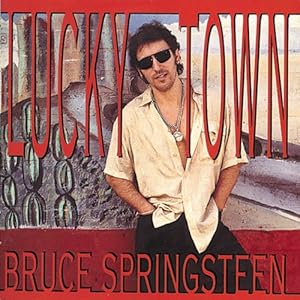
Monday With The Boss - Part 10: Lucky Town
Going hand-in-hand with my post from last week, today we'll take a look at Springsteen's other release from March 31st, 1992, Lucky Town.
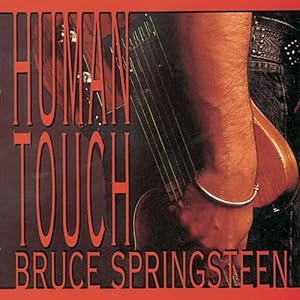
As we talked about in regards to Human Touch, that album was supposed to be the "soul" album, and Lucky Town was going to be the "rock" album. In reality, they both pretty much sound like Springsteen, but it is possible to detect the different forces that are applied to each record.
As a whole, I do like Lucky Town more than Human Touch, and I think that's the general opinion of most fans. Personally, I see this record as possibly where Springsteen's reputation as a influence on the "Alt Country" movement begins. There's a definite country vibe to a lot of these tunes.
When it comes right down to it, a lot of the same comments I've made about Human Touch can be applied to this album. The lack of E-Street Band involvement is keenly felt, the albums feel like a much "fuller" experience if you take them together, etc. (Quite honestly, I probably should've combined Parts 9 and 10 of this series into a single entry, and covered both albums together.)
Like Human Touch was about change, and upheaval. Lucky Town seems, to these ears to be about rolling into a bright future. A future where things may be different, but that's not always a bad thing. I mean, when an album opens with a track called Better Days, you're looking at a pretty positive feel. The album is simply fun to listen to, even the moments of slightly darker introspection, like My Beautiful Reward, still promise something hopeful.
There are tracks here that I absolutely adore, The aforementioned Better Days always puts a smile on my face, and Local Hero is such a light-hearted shot at Springsteen's own fame an image you can't help but give a chuckle. Living Proof is simply a joyous ode to the birth of Springsteen's son.
I've grown very, very fond of that last song. The last Springsteen concert I attended (Bradley Center, Milwaukee, WI, Nov. 15th, 2009), during the "requests" section, a man held up a sign that had a picture of a baby, with a onesie that said "Future Boss Fan" and "3 weeks ago I found Living Proof" written on it. The band scrambled, you have to remember this was a non-E-Street record, and they NEVER play songs from Human Touch or Lucky Town. (Which is a damn shame) Bruce got the band in line after some work, and it really turned out to be a beautiful version.That's my primary memory of that song, and I treasure it.
There is joy aplenty on Lucky Town, acceptance of risk, as in Leap of Faith, and commitment, as in If I Should Fall Behind. It's not hard to see that this is Springsteen's album about his commitment to Patti Scalfia, and joys he found in their life together. After the uncertainty and turmoil on display on Human Touch, it feels like coming out the other side, and see that, yep...You did pull it off. It's liberating and joyous. I smile a lot when I listen to this album.
I think Bruce smiled a lot when he wrote it. It feels looser and less calculated than it's sister release. I think Bruce just started having fun making music again. That, my friends, is something that's always great to hear.
Then, of course, he flipped it back the other way....
As we talked about in regards to Human Touch, that album was supposed to be the "soul" album, and Lucky Town was going to be the "rock" album. In reality, they both pretty much sound like Springsteen, but it is possible to detect the different forces that are applied to each record.
As a whole, I do like Lucky Town more than Human Touch, and I think that's the general opinion of most fans. Personally, I see this record as possibly where Springsteen's reputation as a influence on the "Alt Country" movement begins. There's a definite country vibe to a lot of these tunes.
When it comes right down to it, a lot of the same comments I've made about Human Touch can be applied to this album. The lack of E-Street Band involvement is keenly felt, the albums feel like a much "fuller" experience if you take them together, etc. (Quite honestly, I probably should've combined Parts 9 and 10 of this series into a single entry, and covered both albums together.)
Like Human Touch was about change, and upheaval. Lucky Town seems, to these ears to be about rolling into a bright future. A future where things may be different, but that's not always a bad thing. I mean, when an album opens with a track called Better Days, you're looking at a pretty positive feel. The album is simply fun to listen to, even the moments of slightly darker introspection, like My Beautiful Reward, still promise something hopeful.
There are tracks here that I absolutely adore, The aforementioned Better Days always puts a smile on my face, and Local Hero is such a light-hearted shot at Springsteen's own fame an image you can't help but give a chuckle. Living Proof is simply a joyous ode to the birth of Springsteen's son.
I've grown very, very fond of that last song. The last Springsteen concert I attended (Bradley Center, Milwaukee, WI, Nov. 15th, 2009), during the "requests" section, a man held up a sign that had a picture of a baby, with a onesie that said "Future Boss Fan" and "3 weeks ago I found Living Proof" written on it. The band scrambled, you have to remember this was a non-E-Street record, and they NEVER play songs from Human Touch or Lucky Town. (Which is a damn shame) Bruce got the band in line after some work, and it really turned out to be a beautiful version.That's my primary memory of that song, and I treasure it.
There is joy aplenty on Lucky Town, acceptance of risk, as in Leap of Faith, and commitment, as in If I Should Fall Behind. It's not hard to see that this is Springsteen's album about his commitment to Patti Scalfia, and joys he found in their life together. After the uncertainty and turmoil on display on Human Touch, it feels like coming out the other side, and see that, yep...You did pull it off. It's liberating and joyous. I smile a lot when I listen to this album.
I think Bruce smiled a lot when he wrote it. It feels looser and less calculated than it's sister release. I think Bruce just started having fun making music again. That, my friends, is something that's always great to hear.
Then, of course, he flipped it back the other way....
Monday, October 18, 2010
Monday With the Boss - Part 9: Human Touch
March 31st, 1992 was kind of a big day for Springsteen fans. It had been five years since The Boss released a studio album, and the waiting was going to yield us two full-length studio albums. This came with some melancholy, as they were also the first releases from Springsteen after he disbanded the E-Street Band when the "Tunnel of Love Express" tour came to an end. He had cut ties with that band permanently, at least for the time being.
I'm going to tackle this as they are listen on the official website, which appears to be alphabetically. So, we start with Human Touch.
It is kind of difficult to talk about these two records separately. Yes, they were two separate albums, but the same-day release, and similar design schemes, do indicate they are supposed to be parts of a whole. Much like, when I think the Guns 'N Roses Use Your Illusion albums, which came out around the same time, I tend to think of them as a double album you could buy in two parts.
Much like the GN'R releases, these Springsteen offerings tend to come off better if you look at it in terms of being one statement. A long, kinda rambling statement, but then, most double albums are. That said, there's much more in the way of "individual identity" between the Springsteen records than the Use Your Illusions.
Human Touch was the "soulful" side of the equation. Coming out of the huge boost in fame from Born in the U.S.A., and the confusion and upheaval of his marriage, divorce and beginning a family with Patti Scialfa (Son Evan was born in 1990), it's my impression that Springsteen wanted to change everything. Or at least try to. Part of that was removing himself from the safe confines of the E-Street Band, and attempting to embrace the sounds of the Motown and R& B artists he admired.
Human Touch is that attempt. You can hear it in the excursions outside the typical Springsteen seaside rock idiom. Thing is, full-out soul is not the best place for Bruce, his voice just isn't strong enough for it, for one. Not that any of these tracks really gets to full-out soul. I actually find that a positive about the record. You hear the influence, but it doesn't overwhelm who Springsteen is.
The lyrics also dance around this idea of new beginnings. Pretty much across the board, the songs are about upheaval, for both good or ill. On one hand, you have the apocalyptic craziness of 57 Channels and Nothin' On (which a lot of people hate, but I tend to enjoy as a weird left-turn), on the other the uplifting "time to start again" hope of Roll of the Dice. Heck, he even includes a lullaby written for his first-born son, Pony Boy. Can't get any more "new beginnings" than that. Springsteen was fully aware that he was letting go of a lot of things connected to his past (even moving to California), and trying something new. Human Touch knows that this is a dangerous point, filled with fear and hope, yet it was a change that Bruce felt he needed to pursue.
The choice of moving away from the E-Street Band (with the exception of keyboardist Roy Brittan, who, with Springsteen, Jon Landau and Chuck Plotkin, produced the album, and co-wrote some material - Oh, and, of course Patti Scialfa is on the album) is also indicative of this desire to "start fresh." Yet, it's really not all that successful. Mainly, I feel this is because the session musicians he brought in were so adept at embracing the "Springsteen Sound." They just plain sound like a highly skilled cover version of the E-Street Band. Why just bring in a bunch of people who sound like a copy of the original, when you have the original at your disposal?
When you come right down to it, Human Touch isn't a "go-to" Springsteen record for me. It's not one I'll immediately think of when I want to listen to the boss. However, I'm always amazed how much I enjoy it when I do listen. There are some real gems on this album. I Wish I Were Blind ought to be an out-and-out classic. All or Nothin' At All rocks in all the right ways, and the title track is really nice.
The soul experiment was not a rousing success, and, while every other Springsteen album gets mined liberally during live shows, tracks from Human Touch, and it's companion release, are rarely, if ever, played. That's a shame. However, the soul influence is always on display when Springsteen plays live. The "soul revival" has become such a centerpiece of the entire Springsteen persona, it's amazing to me that so many fans rejected (and still do) his, admittedly imperfect, attempts in that direction on record.
Of course, I think a lot of that still, to this day, has to do with dismissing the E-Street Band.
I'm going to tackle this as they are listen on the official website, which appears to be alphabetically. So, we start with Human Touch.
It is kind of difficult to talk about these two records separately. Yes, they were two separate albums, but the same-day release, and similar design schemes, do indicate they are supposed to be parts of a whole. Much like, when I think the Guns 'N Roses Use Your Illusion albums, which came out around the same time, I tend to think of them as a double album you could buy in two parts.
Much like the GN'R releases, these Springsteen offerings tend to come off better if you look at it in terms of being one statement. A long, kinda rambling statement, but then, most double albums are. That said, there's much more in the way of "individual identity" between the Springsteen records than the Use Your Illusions.
Human Touch was the "soulful" side of the equation. Coming out of the huge boost in fame from Born in the U.S.A., and the confusion and upheaval of his marriage, divorce and beginning a family with Patti Scialfa (Son Evan was born in 1990), it's my impression that Springsteen wanted to change everything. Or at least try to. Part of that was removing himself from the safe confines of the E-Street Band, and attempting to embrace the sounds of the Motown and R& B artists he admired.
Human Touch is that attempt. You can hear it in the excursions outside the typical Springsteen seaside rock idiom. Thing is, full-out soul is not the best place for Bruce, his voice just isn't strong enough for it, for one. Not that any of these tracks really gets to full-out soul. I actually find that a positive about the record. You hear the influence, but it doesn't overwhelm who Springsteen is.
The lyrics also dance around this idea of new beginnings. Pretty much across the board, the songs are about upheaval, for both good or ill. On one hand, you have the apocalyptic craziness of 57 Channels and Nothin' On (which a lot of people hate, but I tend to enjoy as a weird left-turn), on the other the uplifting "time to start again" hope of Roll of the Dice. Heck, he even includes a lullaby written for his first-born son, Pony Boy. Can't get any more "new beginnings" than that. Springsteen was fully aware that he was letting go of a lot of things connected to his past (even moving to California), and trying something new. Human Touch knows that this is a dangerous point, filled with fear and hope, yet it was a change that Bruce felt he needed to pursue.
The choice of moving away from the E-Street Band (with the exception of keyboardist Roy Brittan, who, with Springsteen, Jon Landau and Chuck Plotkin, produced the album, and co-wrote some material - Oh, and, of course Patti Scialfa is on the album) is also indicative of this desire to "start fresh." Yet, it's really not all that successful. Mainly, I feel this is because the session musicians he brought in were so adept at embracing the "Springsteen Sound." They just plain sound like a highly skilled cover version of the E-Street Band. Why just bring in a bunch of people who sound like a copy of the original, when you have the original at your disposal?
When you come right down to it, Human Touch isn't a "go-to" Springsteen record for me. It's not one I'll immediately think of when I want to listen to the boss. However, I'm always amazed how much I enjoy it when I do listen. There are some real gems on this album. I Wish I Were Blind ought to be an out-and-out classic. All or Nothin' At All rocks in all the right ways, and the title track is really nice.
The soul experiment was not a rousing success, and, while every other Springsteen album gets mined liberally during live shows, tracks from Human Touch, and it's companion release, are rarely, if ever, played. That's a shame. However, the soul influence is always on display when Springsteen plays live. The "soul revival" has become such a centerpiece of the entire Springsteen persona, it's amazing to me that so many fans rejected (and still do) his, admittedly imperfect, attempts in that direction on record.
Of course, I think a lot of that still, to this day, has to do with dismissing the E-Street Band.
Monday, October 11, 2010
Monday With The Boss - Part 8: Tunnel of Love
Welcome to the eighth edition of our tour of the Bruce Springsteen discography, this week we have Tunnel of Love, first released on October 9th, 1987.
Following up a mega-successful album like Born in the U.S.A. is never easy. The anticipation and expectations become so great, and there's always a large part of your audience that wants exactly the same thing, all over again. Which is why Tunnel of Love represents a huge gambit on Springsteen's part. One that, on financial terms, wasn't a total success (it only went triple Platinum), but, in my humble opinion, was on an artistic level.
The bombastic 80's production of the previous record is largely gone, as is the E-Street Band, for the most part. Springsteen plays most of the instruments himself, and, as such, this Springsteen/Jon Landau/Chuck Plotkin produced work is considered a "solo" album (though his name as always appeared alone on studio albums, even with the E-Street Band). In place of these elements from the previous album are a series of tunes featuring introspective lyrics about relationships between men and women. A subject matter that Springsteen had only explored in a cursory way prior.
Tunnel of Love has been called "The Divorce Album" by some, due to it's release and tour coinciding with his break up with actress Julianne Phillips. The tour, which did feature the E-Street Band, brought Patti Scialfa front and center as Springsteen's foil in these relationship songs. They began an affair, his marriage to Phillips ended, and Bruce and Patti have been together ever since. I'm not one to drag personal lives into these things, but...it's pretty much what the entire album is about. Clearly Patti was, and is, Springsteen's life-partner. Not everyone gets it right the first time, as I can well attest.
I think it's pretty damn clear from the album that things were not all peaches and cream in the Springsteen/Phillips marriage. The songs are almost universally about men and women in relationships and trying to connect, sometimes succeeding, sometimes failing. Listening to Brilliant Disguise, and knowing what, ultimately, was going on in the Springsteen marriage, gives it a emotional heft beyond the fantastic words and music. You see exactly how much of himself Bruce was offering up for his listeners;
It's certainly a record I can immediately, and powerfully, connect with every, single time I listen to it. I mean, everyone has ups and downs in relationships, and Springsteen cuts right to the heart of that. There's also the very apparent undercurrent, for me, that many of my problems are of my own making. Springsteen feels the same way, and, again, his words and music bring that right to the surface.
It's for these reasons alone that Tunnel of Love is a very, very close second in my list of favorite Springsteen albums. The sheer honesty, and unblinking self-evaluation, is powerful. It's a naked record, one I certainly believe is the most personal in his catalog. I'd also say that while I, personally enjoy The Wild, the Innocent and the E-Street Shuffle more, I think Tunnel of Love is Springsteen's best stand-alone work.
Yeah, I think it kicks Nebraska's ass....
Following up a mega-successful album like Born in the U.S.A. is never easy. The anticipation and expectations become so great, and there's always a large part of your audience that wants exactly the same thing, all over again. Which is why Tunnel of Love represents a huge gambit on Springsteen's part. One that, on financial terms, wasn't a total success (it only went triple Platinum), but, in my humble opinion, was on an artistic level.
The bombastic 80's production of the previous record is largely gone, as is the E-Street Band, for the most part. Springsteen plays most of the instruments himself, and, as such, this Springsteen/Jon Landau/Chuck Plotkin produced work is considered a "solo" album (though his name as always appeared alone on studio albums, even with the E-Street Band). In place of these elements from the previous album are a series of tunes featuring introspective lyrics about relationships between men and women. A subject matter that Springsteen had only explored in a cursory way prior.
Tunnel of Love has been called "The Divorce Album" by some, due to it's release and tour coinciding with his break up with actress Julianne Phillips. The tour, which did feature the E-Street Band, brought Patti Scialfa front and center as Springsteen's foil in these relationship songs. They began an affair, his marriage to Phillips ended, and Bruce and Patti have been together ever since. I'm not one to drag personal lives into these things, but...it's pretty much what the entire album is about. Clearly Patti was, and is, Springsteen's life-partner. Not everyone gets it right the first time, as I can well attest.
I think it's pretty damn clear from the album that things were not all peaches and cream in the Springsteen/Phillips marriage. The songs are almost universally about men and women in relationships and trying to connect, sometimes succeeding, sometimes failing. Listening to Brilliant Disguise, and knowing what, ultimately, was going on in the Springsteen marriage, gives it a emotional heft beyond the fantastic words and music. You see exactly how much of himself Bruce was offering up for his listeners;
Across the board, Springsteen never lets himself off the hook. In songs like Two Faces, he's brutally honest about the weaknesses in himself, and how he tries to hide them;Now you play the loving woman
I'll play the faithful man
But just don't look too close
into the palm of my hand
I met a girl and we ran awayIt also features some fantastic love songs, like Tougher Than the Rest, which is likely my favorite love song, ever (the video is also a fantastic piece of work). As well as a great rock number, that still hews to the theme of the album, in Spare Parts (one of my favorite guitar riffs, ever). Point being, it's not just a slog through depression. It's an exploration of love, in all it's states and forms, in victory and defeat.
I swore I'd make her happy every day
And how I made her cry
Two faces have I
It's certainly a record I can immediately, and powerfully, connect with every, single time I listen to it. I mean, everyone has ups and downs in relationships, and Springsteen cuts right to the heart of that. There's also the very apparent undercurrent, for me, that many of my problems are of my own making. Springsteen feels the same way, and, again, his words and music bring that right to the surface.
It's for these reasons alone that Tunnel of Love is a very, very close second in my list of favorite Springsteen albums. The sheer honesty, and unblinking self-evaluation, is powerful. It's a naked record, one I certainly believe is the most personal in his catalog. I'd also say that while I, personally enjoy The Wild, the Innocent and the E-Street Shuffle more, I think Tunnel of Love is Springsteen's best stand-alone work.
Yeah, I think it kicks Nebraska's ass....
Monday, October 4, 2010
Monday With The Boss: Part 7 - Born in the U.S.A.
Welcome to Monday, and here we are again stepping down the recording history of Bruce Springsteen. This time looking at the mega-hit album Born in the U.S.A., originally released on June 4th, 1984.
This album has a rather checkered reputation. It sold spectacularly (Seven weeks as Billboard's number one album), and seven of it's twelve tracks were Billboard top ten hits. Yet, there's a certain disdain for the record. It's got a more "pop" feel than likely any other Springsteen album, and the production is sheer 80's. There's a ton of synthesizer on the record, where piano or organ might have been previously, and after.
The Springsteen team had come to a point where the whole idea was to bring Bruce's music to the largest audience possible. All efforts were made to that end, including very "of the moment" production. I find it hard to fault the desire, any artist who says they don't want to reach as many people as possible with their art is either kidding themselves, or an elitist. One thing I find it impossible to accuse Springsteen of is being an elitist. They wanted to sell records, they wanted to reach a lot of people. You may call it a "sell out," but I think that's a lazy description from people who still smart at the idea that Springsteen isn't just for them, anymore.
Yet, what amazes me, and continues to hover around the album, is the misconceptions about the nature and tone of the songs. The fact is, almost every, last song on Born in the U.S.A was written at the same time as the tracks on Nebraska. The production and playing are very pop and upbeat, but, almost to a fault, the lyrical content is rather dark.
Take "Dancing in the Dark," which was added to the album late in the process because Manager/Producer Jon Landau felt they "needed a single." So, Bruce wrote one, a very danceable track, with an iconic video, to boot. A video that for many, many people, set their image of Springsteen for years and years to come;
Yet, when you look at the actual lyrical content...It's anything but peppy or joyous;
Yeah, when you were a little kid, dancing around to this "fun" song, little did you know it was about a depressed, lonely guy looking for a cheap, anonymous one-night-stand.I get up in the evening
and I ain't got nothing to say
I come home in the morning
I go to bed feeling the same way
I ain't nothing but tired
Man I'm just tired and bored with myself
Hey there baby, I could use just a little help
Thing is, this entire "lightweight" album is filled with rage, resentment, anger, and loss. I consider it a continual reminder of the surface-level obsession of the Reagan era that 'ole Ronny tried to co-opt "Born in the U.S.A." itself as some sort of call for national pride.
Down in the shadow of the penitentiary
Out by the gas fires of the refinery
I'm ten years burning down the road
Nowhere to run ain't got nowhere to go
Uh, yeah...OK.
Yet, these conceptions of the album live on, as some sort of flag-waving ode to the "boom years" of Reaganomics. Yet again, I have to go back to the idea that most of these songs came from the same creative burst that produced Nebraska. Springsteen was not happy, and not singing the praises of the then-current administration.
There's a really excellent example of what I'm taking about in the Tracks box set, and the 18 Tracks sampler, Springsteen put out in 1999. On there we find a very, very "Nebraska" version of "Born in the U.S.A." It's in this acoustic version where the wail of pain and sadness that drives the song is evident. The ultimate version released on Born in the U.S.A. drives the song more to a scream of rage, but...that is so easliy taken for shouting in pride.
Like I said, there were a lot of hits on Born in the U.S.A., "Dancing in the Dark," "Cover Me," "Born in the U.S.A.," "I'm on Fire," "Glory Days," "I'm Going Down," and "My Hometown" all charted in the top ten. Looking at it just in songwriting terms, the album is kind of a goldmine. Yes, yes, Springsteen had left behind the more spazmatic lyrical content, and the 80's production is slathered all over the songs. That doesn't kill the fact that Springsteen had learned to effectively get his message across, and still craft catchy, compelling songs. Sometimes, as mentioned before, putting those two elements in direct opposition to each other.
I'd go as far as to say there's only one true stinker on the album, "I'm going Down," which is a doozy. Seriously, I think it may, in fact, be the worst song Springsteen has ever released on a album. It suffers the George Harrison "I Got My Mind Set On You" problem. The song virtually consists of the title being repeated ad nauseum. Were as Harrison's track was famously lampooned as "This Song is Just Six Words Long," Springsteen cut that down to three. Just...not good.
The album was produced by Springsteen, with Jon Landau and Steven Van Zandt returning, adding Chuck Plotkin. After the record was completed, Van Zandt would leave the E-Street Band to pursue his solo career. Nils Lofgren took his place for the Born in the U.S.A. tour, and has been associated with the band ever since, both on his own, and alongside Van Zandt, when he returned.
Monday, September 27, 2010
Monday With The Boss - Part 6 - Nebraska
Here we are again, with part six of our trip through the Springsteen discography. Today it's Bruce's sixth studio album, which is beloved by many, Nebraska, released on September 20th, 1982.
Nebraska seems to be the album that non-fans think of as Springsteen's masterpiece. I often have conversations with folks who find out I'm a big Boss fan, and I hear some variation of, "I can take or leave Springsteen, but Nebraska is amazing." I think there's something about the stripped-down "folkie" sound that immediately strikes people as "authentic"
Thing about it is, I see the version of Springsteen that's put forth on this album as a valid and important part of his life as an artist. I also, however, don't see it as the the cornerstone of it. Springsteen is far too much of an entertainer, far too much of a rocker, for this to be a defining sonic representation.
However, what this stripped down approach does do is bring the songwriting, the storytelling, to the forefront. It's this Springsteen of the early 80's that became much more involved in political discourse, and documenting the lives of the less fortunate. It's much more prevalent in Born in the USA, but that album and this one are absolutely linked, not just by era, but also in intent. That's something that we'll get into next week.
Nebraska has also been called Bruce's "depression album." Not only because of the down on their luck personalities of the people in the songs, but also because of how it was recorded. Springsteen was at a point in his life where he was feeling at a personal low-point, and working on demos, alone in his home with a 4-track cassette recorder. That sense of personal desolation is pretty evident in the finished album.
The original intent was for all of these demos to be re-recorded as full E-Street Band tracks, and that would be the ultimate album. It's been confirmed by several members of the band that all of the tracks on Nebraska were, in fact, recorded by the entire band, proper. These tracks have grown to legend as "Electric Nebraska" in fan circles. They've never been released, and comments from the Springsteen camp tend to indicate they never will. The ultimate decision was that the best versions of these songs were the four-track demos that Springsteen cut by himself.
The actual Portastudio recorder is now on display in the special Springsteen exhibit at the Rock and Roll Hall of Fame and Museum in Cleveland, OH, if you have a desire to see it. Kind of amazing to stand there in front of it. The instruments on the album are limited, acoustic guitar dominates, with harmonica accents. There are other instruments on there, but relegated to the background, except for the electric guitar on "Open All Night." The ultimate effect is to serve up Springsteen's voice as the primary instrument. The lyrics hit hard because there's very little to get between you and them. The delivery is also very much steeped in Springsteen's state at the time. You can feel the desperation and longing in the voice.
However, there are reviews that peg this as a "hopeless" album, and I don't really agree with that. It is bleak, bleaker even that Darkness on the Edge of Town, but there are moments of hope and grace here. When Joe Roberts let's his brother Frankie escape the law in "Highway Patrolman," mainly because, "Man turns his back on his family he ain't no friend of mine," you do feel the grace of a man seeing that wild things need to be set free to run. Or, in "Open All Night," when our narrator sings of his headlong race across New Jersey to get back to his girl Rita, there's something uplifting, even if his "boss don't dig me, so he put me on the night shift."
Not to say it's all peaches and cream. "Atlantic City" is steeped with the sense that the favor he's doing for the guy he met isn't going to end in anything but tragedy. The title cut, sung from the point of view of real-life mass murderer Charlie Starkweather, lets you feel the ticking away of the last minutes of a doomed man. Poor "Johnny 99" is certain to pay a heavy debt to Judge "Mean" John Brown for losing his job, and dealing with it the only way he could see for himself.
Add to this longing. "Mansion on the Hill" speaks of a symbol for success and financial gain, and how that not only keeps the "have nots" outside, but also the "haves" locked inside. The sense of alienation that even "Used Cars" can represent. Or, the deep sense found in "My Father's House" that somethings can never be reclaimed or repaired once they are gone.
However, Springsteen ends the album with a song of hope, in some sense. "Reason to Believe" lets us see that, no matter how silly or odd, everyone has faith in something;
Springsteen's next step was truly, as we might hear on Monty Python, "something completely different." However, not as different as many would like to believe.
Nebraska seems to be the album that non-fans think of as Springsteen's masterpiece. I often have conversations with folks who find out I'm a big Boss fan, and I hear some variation of, "I can take or leave Springsteen, but Nebraska is amazing." I think there's something about the stripped-down "folkie" sound that immediately strikes people as "authentic"
Thing about it is, I see the version of Springsteen that's put forth on this album as a valid and important part of his life as an artist. I also, however, don't see it as the the cornerstone of it. Springsteen is far too much of an entertainer, far too much of a rocker, for this to be a defining sonic representation.
However, what this stripped down approach does do is bring the songwriting, the storytelling, to the forefront. It's this Springsteen of the early 80's that became much more involved in political discourse, and documenting the lives of the less fortunate. It's much more prevalent in Born in the USA, but that album and this one are absolutely linked, not just by era, but also in intent. That's something that we'll get into next week.
Nebraska has also been called Bruce's "depression album." Not only because of the down on their luck personalities of the people in the songs, but also because of how it was recorded. Springsteen was at a point in his life where he was feeling at a personal low-point, and working on demos, alone in his home with a 4-track cassette recorder. That sense of personal desolation is pretty evident in the finished album.
The original intent was for all of these demos to be re-recorded as full E-Street Band tracks, and that would be the ultimate album. It's been confirmed by several members of the band that all of the tracks on Nebraska were, in fact, recorded by the entire band, proper. These tracks have grown to legend as "Electric Nebraska" in fan circles. They've never been released, and comments from the Springsteen camp tend to indicate they never will. The ultimate decision was that the best versions of these songs were the four-track demos that Springsteen cut by himself.
The actual Portastudio recorder is now on display in the special Springsteen exhibit at the Rock and Roll Hall of Fame and Museum in Cleveland, OH, if you have a desire to see it. Kind of amazing to stand there in front of it. The instruments on the album are limited, acoustic guitar dominates, with harmonica accents. There are other instruments on there, but relegated to the background, except for the electric guitar on "Open All Night." The ultimate effect is to serve up Springsteen's voice as the primary instrument. The lyrics hit hard because there's very little to get between you and them. The delivery is also very much steeped in Springsteen's state at the time. You can feel the desperation and longing in the voice.
However, there are reviews that peg this as a "hopeless" album, and I don't really agree with that. It is bleak, bleaker even that Darkness on the Edge of Town, but there are moments of hope and grace here. When Joe Roberts let's his brother Frankie escape the law in "Highway Patrolman," mainly because, "Man turns his back on his family he ain't no friend of mine," you do feel the grace of a man seeing that wild things need to be set free to run. Or, in "Open All Night," when our narrator sings of his headlong race across New Jersey to get back to his girl Rita, there's something uplifting, even if his "boss don't dig me, so he put me on the night shift."
Not to say it's all peaches and cream. "Atlantic City" is steeped with the sense that the favor he's doing for the guy he met isn't going to end in anything but tragedy. The title cut, sung from the point of view of real-life mass murderer Charlie Starkweather, lets you feel the ticking away of the last minutes of a doomed man. Poor "Johnny 99" is certain to pay a heavy debt to Judge "Mean" John Brown for losing his job, and dealing with it the only way he could see for himself.
Add to this longing. "Mansion on the Hill" speaks of a symbol for success and financial gain, and how that not only keeps the "have nots" outside, but also the "haves" locked inside. The sense of alienation that even "Used Cars" can represent. Or, the deep sense found in "My Father's House" that somethings can never be reclaimed or repaired once they are gone.
However, Springsteen ends the album with a song of hope, in some sense. "Reason to Believe" lets us see that, no matter how silly or odd, everyone has faith in something;
Seen a man standin' over a dead dog lyin' by the highway in a ditch
He's lookin' down kinda puzzled pokin' that dog with a stick
Got his car door flung open he's standin' out on highway 31
Like if he stood there long enough that dog'd get up and run
Struck me kinda funny seem kinda funny sir to me
Still at the end of every hard earned day people find some reason to believe
Springsteen's next step was truly, as we might hear on Monty Python, "something completely different." However, not as different as many would like to believe.
Monday, September 20, 2010
Monday With The Boss - Part 5: The River
It's Monday, which means another go-around with the Springsteen catalog. The River, originally released on October 10th, 1980.

I have to admit, I am not a huge fan of The River, I'd have to say it's the album from Springsteen's catalog that I am least likely to reach for when a "Springsteen Mood" strikes me. I'd probably say the biggest reason for that is length. This was a double album set, and there are points, for me, when it kinda feels like it's droning on.
Which is a really odd reaction, seeing as how this album contains some of Bruce's most pop songwriting. Including "Hungry Heart," which ended up being Springsteen's first Bilboard Top Ten hit. (#5)
(I'm also learning via the writing of these little essays, as I see the vocals on "Hungry Heart" are sped up, to produce a slightly higher pitch [as Dylan did on "Lay, Lady, Lay]...which explains why I feel comfortably in tune when I sing along at shows, but horribly flat when I attempt it at Karaoke.)
The album is kind of a bastard creation, with many of the tracks being leftovers from that incredibly long Darkness on the Edge of Town recording process, as well as from Born to Run. It's interesting to think that "Drive All Night" started as an interlude in the middle of "Backstreets." Which would've been a crime, as "Drive All Night" is a truly magnificent number.
I think this "bits and pieces" creation is part of why the album tends to wear on me while listening. It's a bit of a Frankenstein monster of a record, and sometimes I feel the pieces, no matter how good they may be on their own, don't quite fit together. The album stated out as a single disk titled The Ties That Bind, with the following track order;
1- The Ties That Bind
2- Cindy
3- Hungry Heart
4- Stolen Car
5- Be True
6- The River
7- You Can Look (But Don't Touch)
8- The Price You Pay
9- I Wanna Marry You
10- Loose Ends
Springsteen rejected this version as "too pop." Which is accurate, to an extent. (The only track here I haven't heard is "Cindy.") This version would be a much more straight-ahead, and unified, album.
Again, it's not like there are awful tracks here, there aren't, in fact, many of them are downright brilliant. It's just that sometimes it feels like four sides of schizophrenic mood swings. Going from "Ramrod" to "Drive All Night" with only "The Price You Pay" to ease the transition is a large leap.
Aside from all that, one of the important things to consider here is the evolution of Springsteen's ability to match music with incongruous lyrics. It's a technique that would come to it's fullest use with Born in the USA, but it starts here. "Hungry Heart" being the obvious example. A very upbeat, pop number, with lyrics about a guy abandoning his family;
So, while I say that the odd mood swings make it difficult for me to listen to the album as a whole, they also provide some of the most powerful moments. I've never said I was easy to figure out, folks.
The album is, again, produced by Springsteen, Jon Landau and Little Steven Van Zandt. Van Zandt has repeatedly made clear that this is his favorite of Springsteen's discography, embracing as it does the early-rock and roll, 50's feel he loves so much on many of it's tracks. He also has said there are (again) many, many outtakes and full albums worth of material he feels are just as good as what's on the disk itself.
I guess I'll start saving for that uber-deluxe reissue of The River in a few years... :)
I have to admit, I am not a huge fan of The River, I'd have to say it's the album from Springsteen's catalog that I am least likely to reach for when a "Springsteen Mood" strikes me. I'd probably say the biggest reason for that is length. This was a double album set, and there are points, for me, when it kinda feels like it's droning on.
Which is a really odd reaction, seeing as how this album contains some of Bruce's most pop songwriting. Including "Hungry Heart," which ended up being Springsteen's first Bilboard Top Ten hit. (#5)
(I'm also learning via the writing of these little essays, as I see the vocals on "Hungry Heart" are sped up, to produce a slightly higher pitch [as Dylan did on "Lay, Lady, Lay]...which explains why I feel comfortably in tune when I sing along at shows, but horribly flat when I attempt it at Karaoke.)
The album is kind of a bastard creation, with many of the tracks being leftovers from that incredibly long Darkness on the Edge of Town recording process, as well as from Born to Run. It's interesting to think that "Drive All Night" started as an interlude in the middle of "Backstreets." Which would've been a crime, as "Drive All Night" is a truly magnificent number.
I think this "bits and pieces" creation is part of why the album tends to wear on me while listening. It's a bit of a Frankenstein monster of a record, and sometimes I feel the pieces, no matter how good they may be on their own, don't quite fit together. The album stated out as a single disk titled The Ties That Bind, with the following track order;
1- The Ties That Bind
2- Cindy
3- Hungry Heart
4- Stolen Car
5- Be True
6- The River
7- You Can Look (But Don't Touch)
8- The Price You Pay
9- I Wanna Marry You
10- Loose Ends
Springsteen rejected this version as "too pop." Which is accurate, to an extent. (The only track here I haven't heard is "Cindy.") This version would be a much more straight-ahead, and unified, album.
Again, it's not like there are awful tracks here, there aren't, in fact, many of them are downright brilliant. It's just that sometimes it feels like four sides of schizophrenic mood swings. Going from "Ramrod" to "Drive All Night" with only "The Price You Pay" to ease the transition is a large leap.
Aside from all that, one of the important things to consider here is the evolution of Springsteen's ability to match music with incongruous lyrics. It's a technique that would come to it's fullest use with Born in the USA, but it starts here. "Hungry Heart" being the obvious example. A very upbeat, pop number, with lyrics about a guy abandoning his family;
Got a wife and kids in Baltimore, JackOr, the shambling 50's-esque rave up of "Sherry Darling," which reveals itself as a long complaint about a girlfriend's mother;
I went out for a ride and I never went back
Like a river that don't know where it's flowing
I took a wrong turn and I just kept going
Your Mamma's yappin' in the back seatThis dichotomy is really reflective of the entire album. It has some of Springsteens most pop creations, but then also very, very dark tracks, like "Independence Day," or the title track. It's disconcerting, in a good way to have side 2 end with the joyous hope of "I Wanna Marry You," and side 3 begin with the absolute marital dissolution of "The River."
Tell her to push over and move them big feet
Every Monday morning I gotta drive her down to the unemployment agency
Well this morning I ain't fighting tell her I give up
Tell her she wins if she'll just shut up
But it's the last time that she's gonna be ridin' with me
So, while I say that the odd mood swings make it difficult for me to listen to the album as a whole, they also provide some of the most powerful moments. I've never said I was easy to figure out, folks.
The album is, again, produced by Springsteen, Jon Landau and Little Steven Van Zandt. Van Zandt has repeatedly made clear that this is his favorite of Springsteen's discography, embracing as it does the early-rock and roll, 50's feel he loves so much on many of it's tracks. He also has said there are (again) many, many outtakes and full albums worth of material he feels are just as good as what's on the disk itself.
I guess I'll start saving for that uber-deluxe reissue of The River in a few years... :)
Monday, September 13, 2010
Monday With The Boss, Part 4 - Darkness on the Edge of Town
Welcome to part 4, where will be looking at Darkness on the Edge of Town, originally released on June 2nd, 1978.

To discuss this album, it really becomes important to talk about the huge events that shook Springsteen's career between the release of Born to Run in 1975, and this album 3 years later. During this time, Bruce ejected Mike Appel as his manager and installed Jon Landau. Ultimately, Landau, Springsteen and E-Streeter Little Steven Van Zandt would produce Darkness on the Edge of Town, but the act of removing Appel resulted in a long, complicated legal battle.
Springsteen was left in a position where the very ownership of his songs was in question, and a court injunction prevented him from releasing an album during the case. Springsteen reportedly felt his career was being held for ransom, and he was left to play live shows to pay the bills, and record songs that he had no idea when they might be released.
In Star Wars-speak, it was a dark time for the E-Street Nation.
Darkness is definitely, well, darker than Born to Run, with song after song that embrace anger, loss and failure over the nobility of the previous album. The characters of Darkness are, in many cases doomed. From the endless circle of alienation of "Adam Raised a Cain," to the day-in-day-out death march of "Factory," these are not songs of escape and growth, but of isolation and endurance.
I mean, this section of "Racing in the Streets" tends to exemplify the album:
Yeah, in a way, Darkness is Springsteen's "reality slaps you in the face" album.
One of the interesting parts of this era was that, in the face of not being able to release anything, Springsteen wrote and recorded a LOT of music. Tracks he gave to Patti Smythe, "Because the Night," Greg Kihn, "Rendezvous," and the Pointer Sisters, "Fire," were born in this time. Literally hours of music was recorded, and very little actually made the album. This November, Springsteen will be releasing a 2-CD set called The Promise containing many of these tracks. It's also going to be in the big Darkness on the Edge of Town reissue set. A good number of Springsteen fans are feeling this is a "Holy Grail" moment.
I don't know that I'd go that far. In a lot of ways, I like Darkness more than Born to Run. It certainly hits harder, and it's far more emotionally raw. There's a truth, and fuller and more honest view of the world around us in this album. During the Tunnel of Love tour, Springsteen skipped playing "Born to Run" with the full band to play it alone with his acoustic guitar and harmonica. He would preface this performance with a a short speech that would culminate with the simple phrase, "nobody wins unless everybody wins."
It's a fine, pure sentiment. A statement of purpose and hope. It is how the world ought to work. The Springsteen of Darkness on the Edge of Town, through his own travails (which would seem less than Earth-shaking to us), had learned that not everyone wins, and you'd better be ready to fight, hard, to get there.
When Springsteen play "Badlands" live, it's a huge sing-along moment. Probably the most powerful unifying moment in the shows I've seen. I think the crowd knows Bruce is speaking a truth, and that their conviction is what can make or break their world. When the one, epic line comes around;
The world may beat you down, crush your dreams, but it doesn't change your value as a human being. You are powerful, you are free, and if you sing along hard enough, no matter what the world might have for you outside that arena, you truly can be glad you're alive.
To discuss this album, it really becomes important to talk about the huge events that shook Springsteen's career between the release of Born to Run in 1975, and this album 3 years later. During this time, Bruce ejected Mike Appel as his manager and installed Jon Landau. Ultimately, Landau, Springsteen and E-Streeter Little Steven Van Zandt would produce Darkness on the Edge of Town, but the act of removing Appel resulted in a long, complicated legal battle.
Springsteen was left in a position where the very ownership of his songs was in question, and a court injunction prevented him from releasing an album during the case. Springsteen reportedly felt his career was being held for ransom, and he was left to play live shows to pay the bills, and record songs that he had no idea when they might be released.
In Star Wars-speak, it was a dark time for the E-Street Nation.
Darkness is definitely, well, darker than Born to Run, with song after song that embrace anger, loss and failure over the nobility of the previous album. The characters of Darkness are, in many cases doomed. From the endless circle of alienation of "Adam Raised a Cain," to the day-in-day-out death march of "Factory," these are not songs of escape and growth, but of isolation and endurance.
I mean, this section of "Racing in the Streets" tends to exemplify the album:
But now there's wrinkles around my baby's eyesThere are a few moments when the mood lightens, and with the opening track, "Badlands," Springsteen ALMOST reaches for that hope and joy that infused the previous album. I tend to believe he wanted it there, in the first song, to at least celebrate that the album was actually released. It's a statement of rebellion, of escape, but not in the sense of freedom that you find in "Born to Run." "Badlands" give us a freedom you have to fight for;
And she cries herself to sleep at night
When I come home the house is dark
She sighs "Baby did you make it all right"
She sits on the porch of her daddy's house
But all her pretty dreams are torn
She stares off alone into the night
With the eyes of one who hates for just being born
Workin' in the fieldsWe also find some sens of redemption and hope near the middle of the album, with "The Promised Land," which Springsteen has always cited as one of his favorites. Again, the song embraces effort and suffering, but also gives us the sense that there is a place, a "Promised Land" where we'll all be treated fairly and justly. Yet, this place is only mentioned in the final line of the chorus, and no explanation is offered. It's a goal, a hope, something to be aspired to. It's there, but a lot of folks ain't gonna find it.
till you get your back burned
Workin' 'neath the wheel
till you get your facts learned
Baby I got my facts
learned real good right now
You better get it straight darling
Poor man wanna be rich,
rich man wanna be king
And a king ain't satisfied
till he rules everything
I wanna go out tonight,
I wanna find out what I got
Yeah, in a way, Darkness is Springsteen's "reality slaps you in the face" album.
One of the interesting parts of this era was that, in the face of not being able to release anything, Springsteen wrote and recorded a LOT of music. Tracks he gave to Patti Smythe, "Because the Night," Greg Kihn, "Rendezvous," and the Pointer Sisters, "Fire," were born in this time. Literally hours of music was recorded, and very little actually made the album. This November, Springsteen will be releasing a 2-CD set called The Promise containing many of these tracks. It's also going to be in the big Darkness on the Edge of Town reissue set. A good number of Springsteen fans are feeling this is a "Holy Grail" moment.
I don't know that I'd go that far. In a lot of ways, I like Darkness more than Born to Run. It certainly hits harder, and it's far more emotionally raw. There's a truth, and fuller and more honest view of the world around us in this album. During the Tunnel of Love tour, Springsteen skipped playing "Born to Run" with the full band to play it alone with his acoustic guitar and harmonica. He would preface this performance with a a short speech that would culminate with the simple phrase, "nobody wins unless everybody wins."
It's a fine, pure sentiment. A statement of purpose and hope. It is how the world ought to work. The Springsteen of Darkness on the Edge of Town, through his own travails (which would seem less than Earth-shaking to us), had learned that not everyone wins, and you'd better be ready to fight, hard, to get there.
When Springsteen play "Badlands" live, it's a huge sing-along moment. Probably the most powerful unifying moment in the shows I've seen. I think the crowd knows Bruce is speaking a truth, and that their conviction is what can make or break their world. When the one, epic line comes around;
For the ones who had a notion,...it's a catharsis the likes of which I rarely feel.
a notion deep inside
That it ain't no sin
to be glad you're alive
The world may beat you down, crush your dreams, but it doesn't change your value as a human being. You are powerful, you are free, and if you sing along hard enough, no matter what the world might have for you outside that arena, you truly can be glad you're alive.
Subscribe to:
Posts (Atom)